
The Full Cultural Cartography Suite
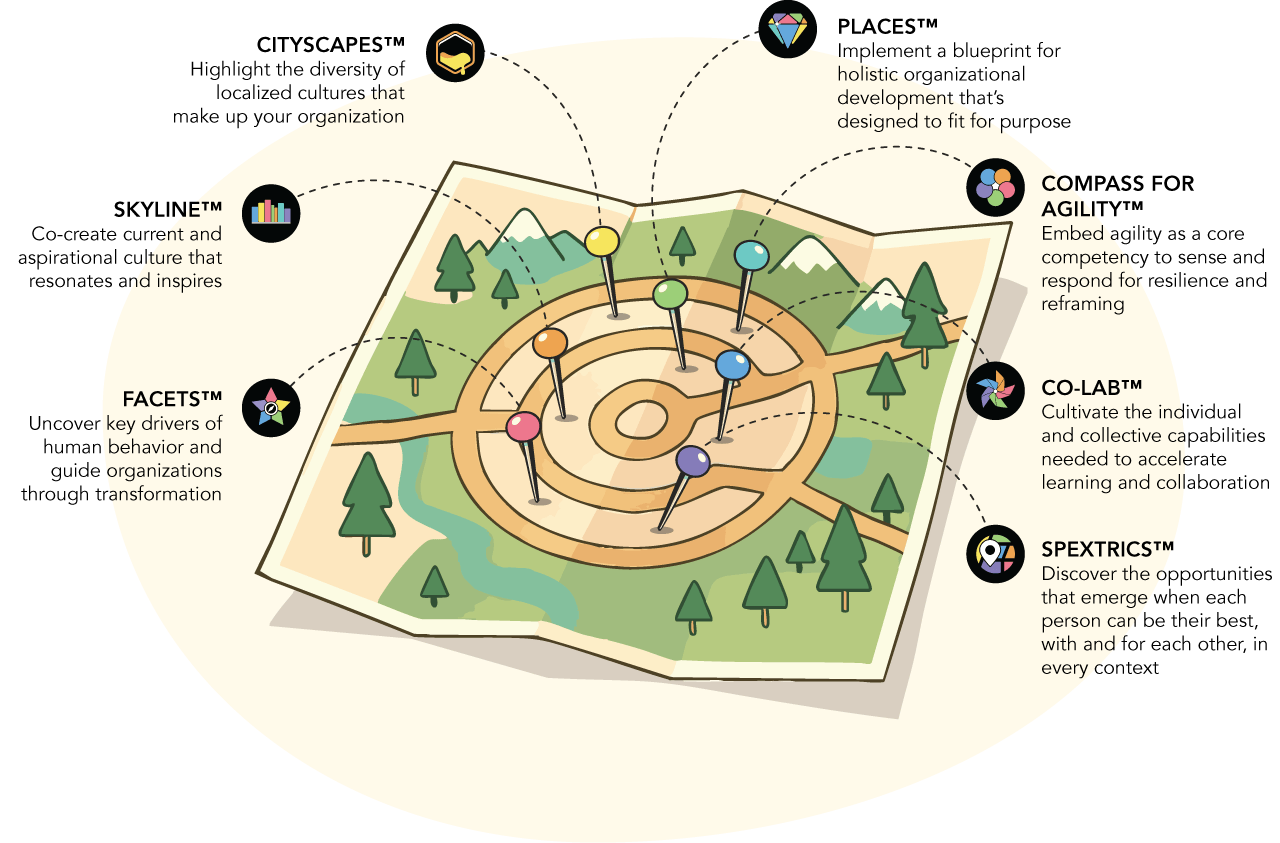
Cultural Cartography is a suite of seven products, each designed to address a specific layer of how your organization actually operates. Whether you need to get everyone on the same page about your culture, bridge the gap between teams who struggle to collaborate, or move from strategy into action, there is a product built for that.
Skyline: Available Now
"We keep saying we're aligned, but three weeks later, everyone's working from a different version of the plan."
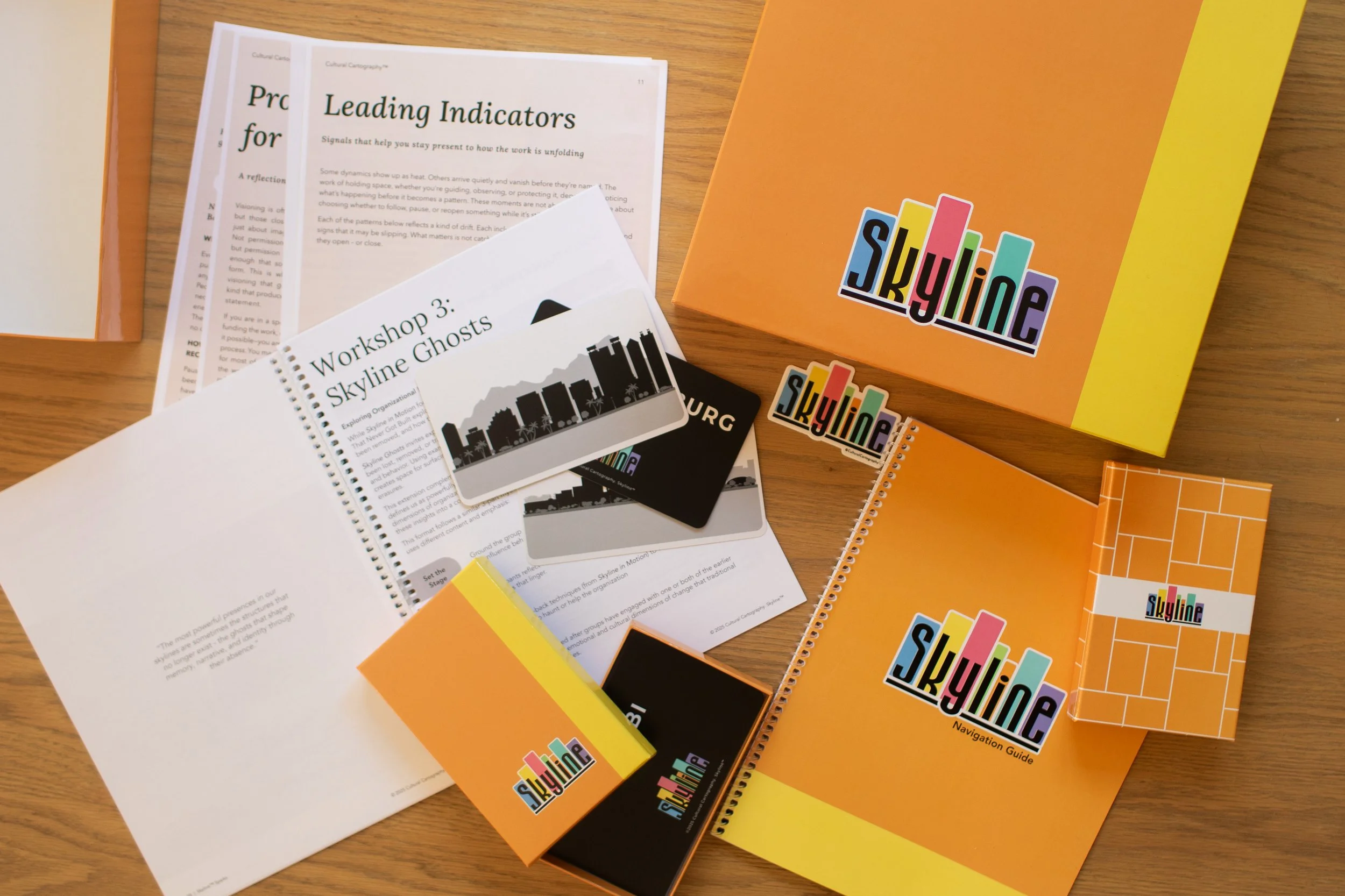
Your organization already has a culture. The question is whether the people inside it can describe it the same way. Skyline uses visual storytelling and structured group sessions to surface what your culture looks like right now, so your team can stop guessing and start working from the same picture. A single Skyline session can surface what months of traditional workshops often miss, because the format is designed to make it safe and simple for people to say what they actually mean.
Leaders use Skyline before strategic planning, after a merger or reorg, when onboarding new leadership, or any time the organization is growing faster than its shared understanding of itself.
Cityscapes: Coming Soon
"Our departments run fine on their own. The problems start when they have to work together."
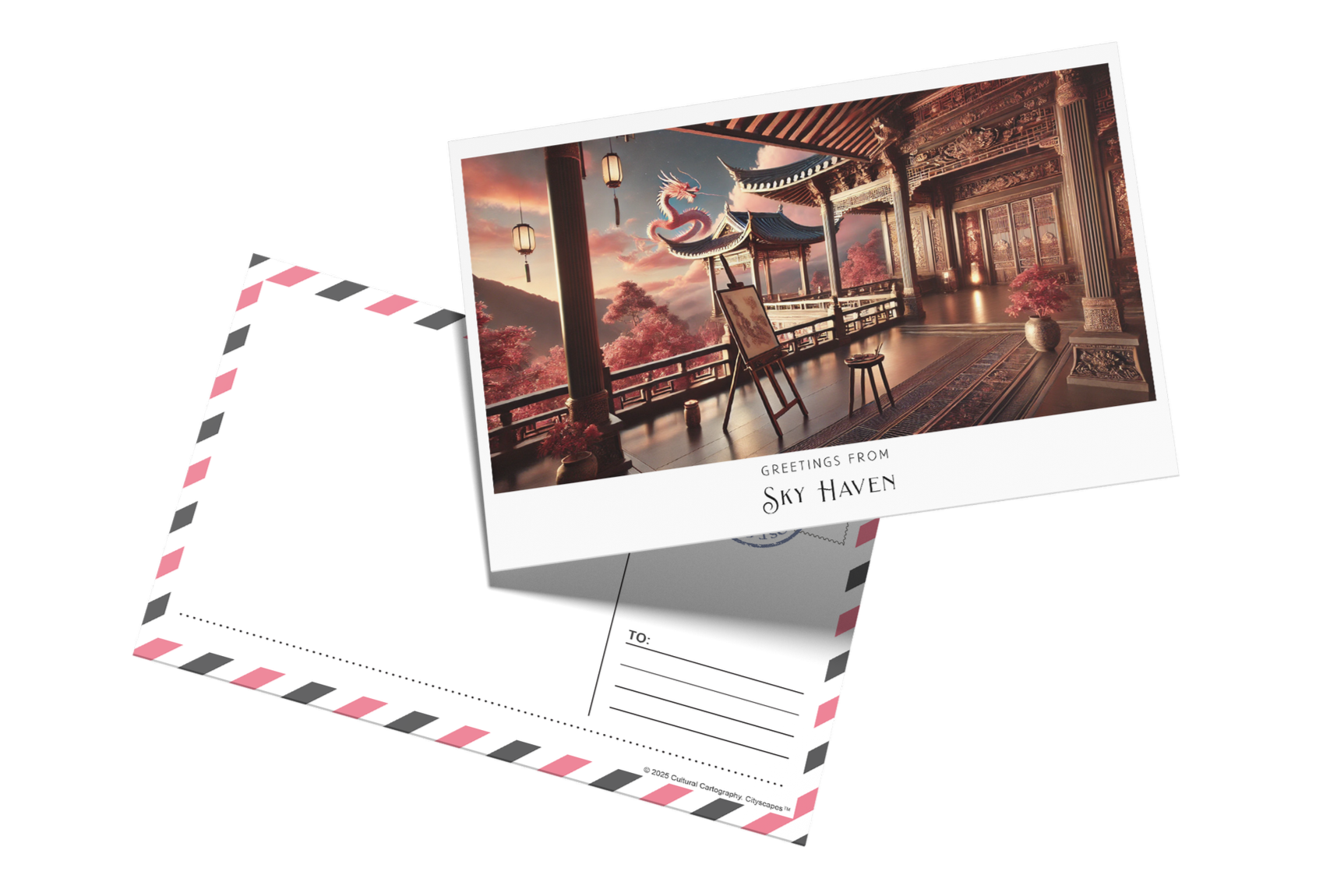
Large organizations rarely have one culture. They have several, and those cultures shape how teams communicate, make decisions, and collaborate across boundaries. Cityscapes gives your organization a shared language for understanding the distinct cultural environments that exist within it, so you can stop treating every department like it operates the same way and start working with the differences that are already there.
This is especially valuable during integrations, acquisitions, or any period where multiple groups are being asked to function as one.
"We have a strategy. What we don't have is a clear way to turn it into something people actually do every day."
PLACES: Coming Soon
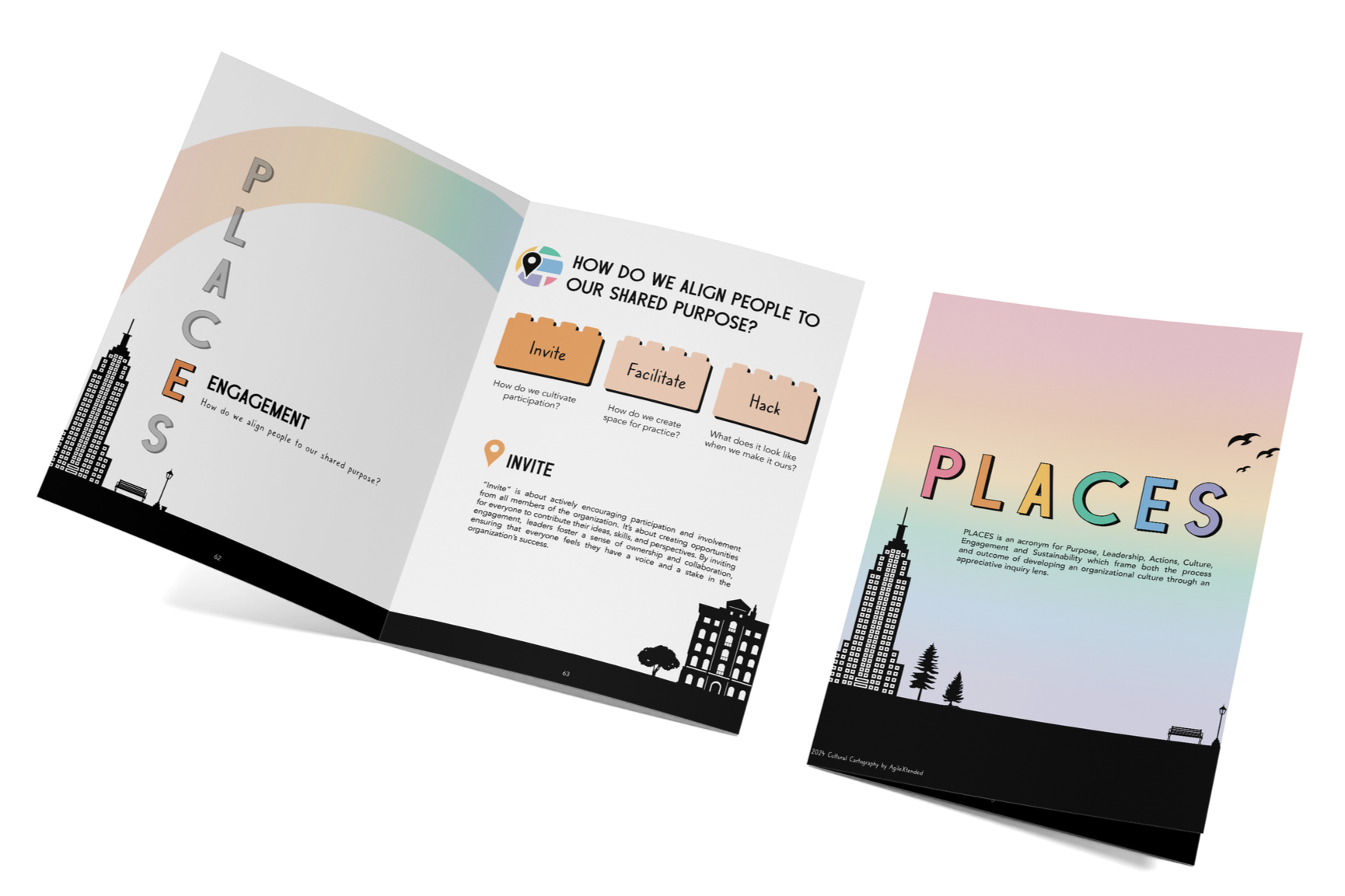
Strategy documents are full of intentions. The gap between strategy and daily work is where most organizations lose momentum. PLACES connects vision to action through six lenses: Purpose, Leadership, Actions, Culture, Engagement, and Sustainability. Each lens helps leaders see where the connection between what the organization says it values and what people actually experience is breaking down, so they can close that gap at the structural level rather than through more communication.
PLACES is designed for organizations dealing with fragmented change efforts, strategic plans that stall after the kickoff, or leaders who are struggling to maintain engagement and consistency across a growing organization.
Compass for Agility™: Coming Soon
"We tried agile. It was slow, expensive, and the organization mostly went back to how it was before."
Most agile transformations focus on process: new frameworks, new meetings, new reporting structures. When those changes collide with a culture that hasn't shifted, the transformation fails, and the organization becomes even more skeptical of the next attempt. Compass for Agility approaches adaptability as a cultural capability, helping organizations build responsiveness and flexibility into how people actually make decisions and do their work, rather than bolting new processes onto old habits.
Organizations reach for Compass for Agility when previous agile efforts have stalled or failed, when teams feel buried under rigid systems, or when leaders need to see measurable progress in how the organization adapts to change within 90 days.
Co-Lab: Coming Soon
"Our meetings are productive on paper. But nothing new ever comes out of them."
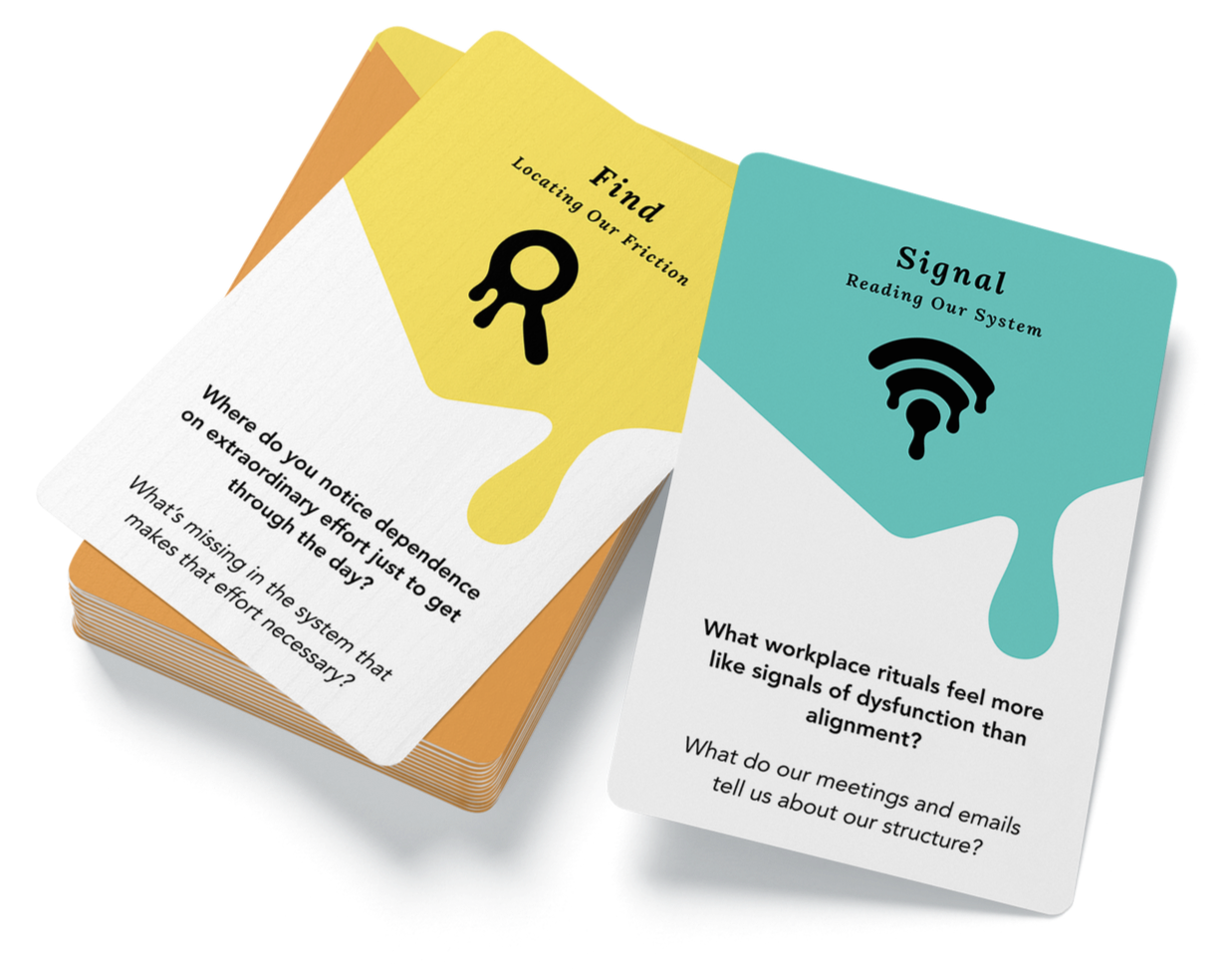
Most meetings follow the same format because the format feels safe, and safe formats produce predictable results. Co-Lab redesigns how people come together to think and solve problems, creating conditions where real collaboration, discovery, and unexpected connections can happen. Through intentional design of time, space, and interaction, Co-Lab moves groups past the usual circular discussions and into the kind of thinking that generates ideas people actually want to act on.
Organizations use Co-Lab when they need a breakthrough on a complex problem, when engagement in group settings has gone flat, or when they want to build a culture of experimentation without blowing up their existing processes.
Spextrics: Coming Soon
"I have talented people who keep stepping on each other's toes."
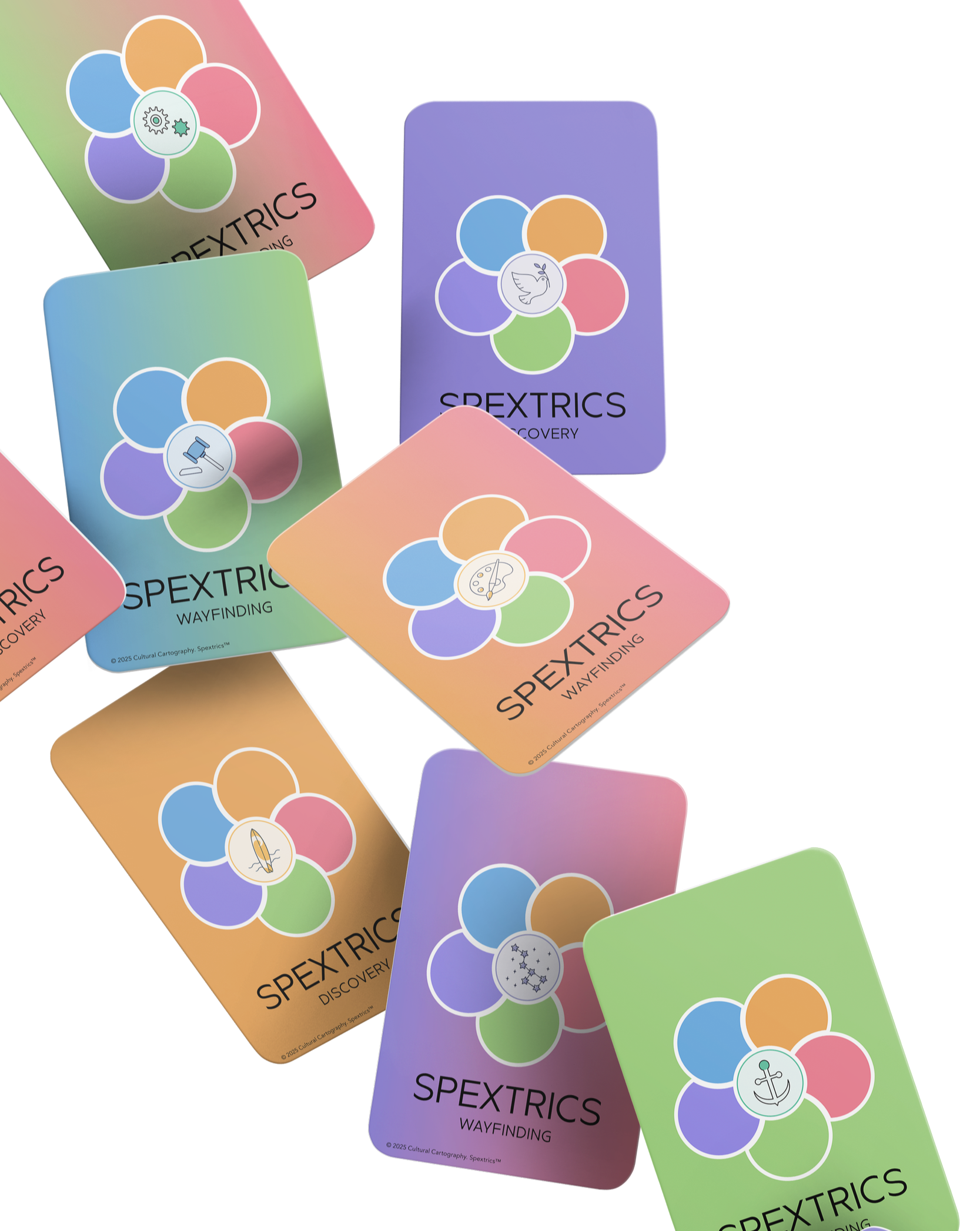
Strong individuals with competing working styles can either accelerate an organization or grind it to a halt, and the difference usually comes down to whether anyone understands the pattern. Spextrics maps the behavioral archetypes and motivations that shape how people collaborate, so your team can see where friction is coming from and start working with each person's strengths instead of around them. The format uses characters and archetypes to make the conversation feel exploratory rather than evaluative, which means people engage honestly rather than defensively.
Spextrics is built for teams where the talent is there but the chemistry is off, where interpersonal tension keeps showing up in the work, or where leaders need to get a group of strong personalities pulling in the same direction.
FACET+S: Coming Soon
"People seem all in during the meeting, but then nothing changes."
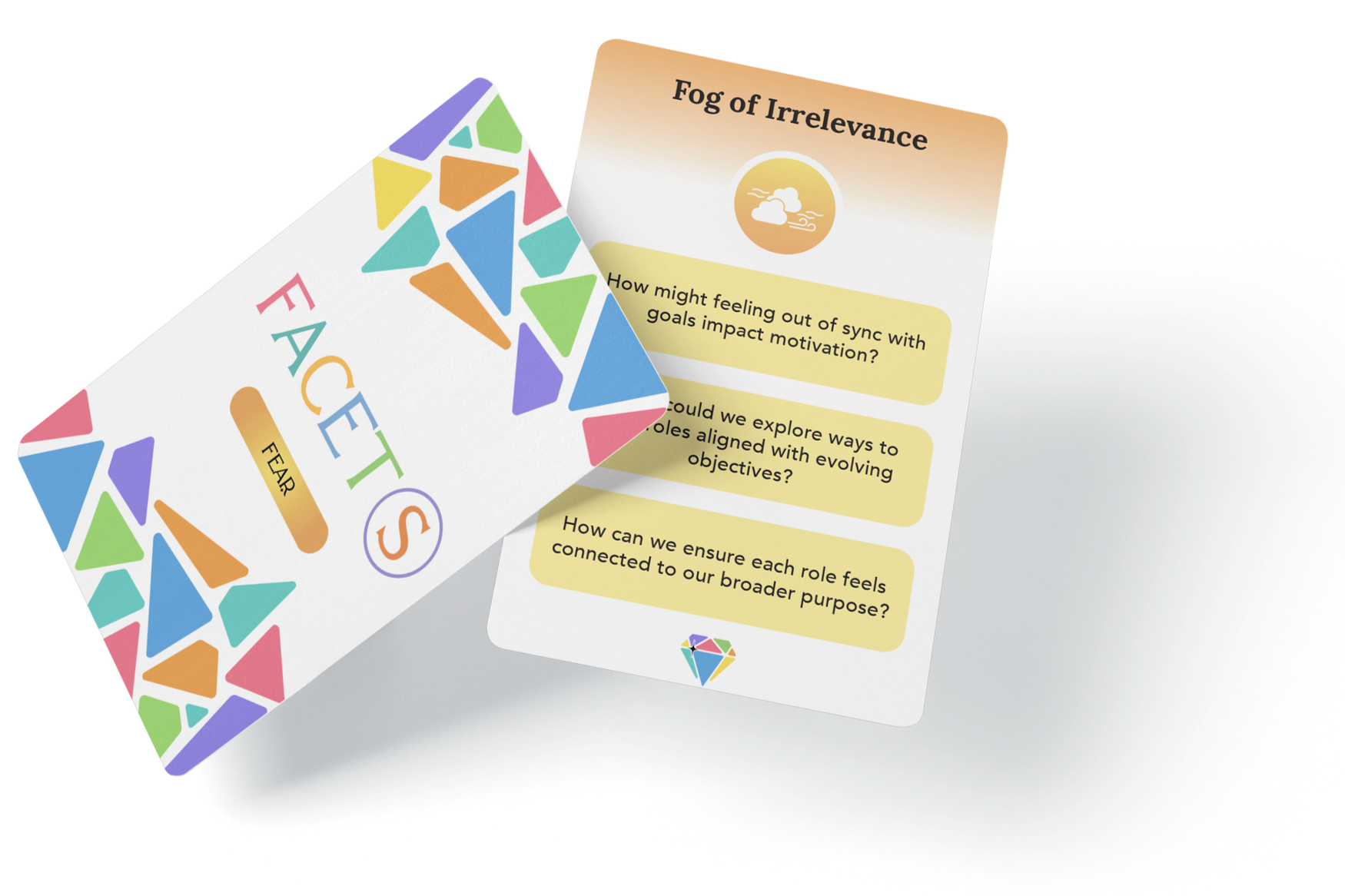
Change efforts stall for reasons that rarely show up in a project plan. Fear of what's coming. Frustration that no one asked before making the decision. Skepticism built up from the last three initiatives that went nowhere. FACETS works with the emotional forces that drive or block momentum: Fear, Anger, Curiosity, Empathy, and Trust. Through structured conversations and targeted activities, FACETS helps leaders surface what people are actually feeling about a change, so they can address resistance at the source rather than pushing harder against it.
Organizations use FACETS when change initiatives keep losing steam, when leadership senses that people are just going through the motions, or when trust between staff and leadership has taken a hit.
You don't have to solve everything at once.
Each product addresses a specific layer of how your organization works, and they're designed to be used independently or together over time. Most organizations start with Skyline because it gives you a shared picture of your culture that every other conversation can build from.
If you already know what your organization needs, reach out. If you're not sure where to start, we can help you figure that out, too.