
Your organization already has a skyline. The question is whether anyone recognizes it as theirs.
For executives and HR leaders who are tired of investing in change that doesn't survive the quarter.
Not every culture problem looks like a culture problem.
A merger that “went fine,” but two years later the teams still operate like strangers, using different language for the same goals.
🔍
A strategy offsite that everyone left energized, but then nothing visibly changed, and nobody can explain why.
🔍
Your best people are still performing, but not quite bringing the fresh ideas they used to.
🔍
A reorg that made sense on paper but now nobody seems to know what the organization stands for anymore.
🔍
Most culture work tries to fix behaviors. But behaviors are downstream of something deeper: the shared (and often unspoken) understanding of who your organization is, where it’s going, and what it values.
What changes when your whole team finally sees the same Skyline.
Skyline™ makes growth possible without needing a consultant in the room every time it happens.
Your leadership team uses the same shorthand to describe where the organization is and where it's headed.
✔️
People stop re-litigating old decisions because they finally understand the "why" behind them.
✔️
New leaders, new hires, and new strategies have something real to orient around, instead of having to reverse-engineer the culture on their own.
✔️
When change happens, your team doesn't panic; they pay attention.
✔️
Introducing Skyline™
\ \ \ \ \ \ \ \ \ \ \ \
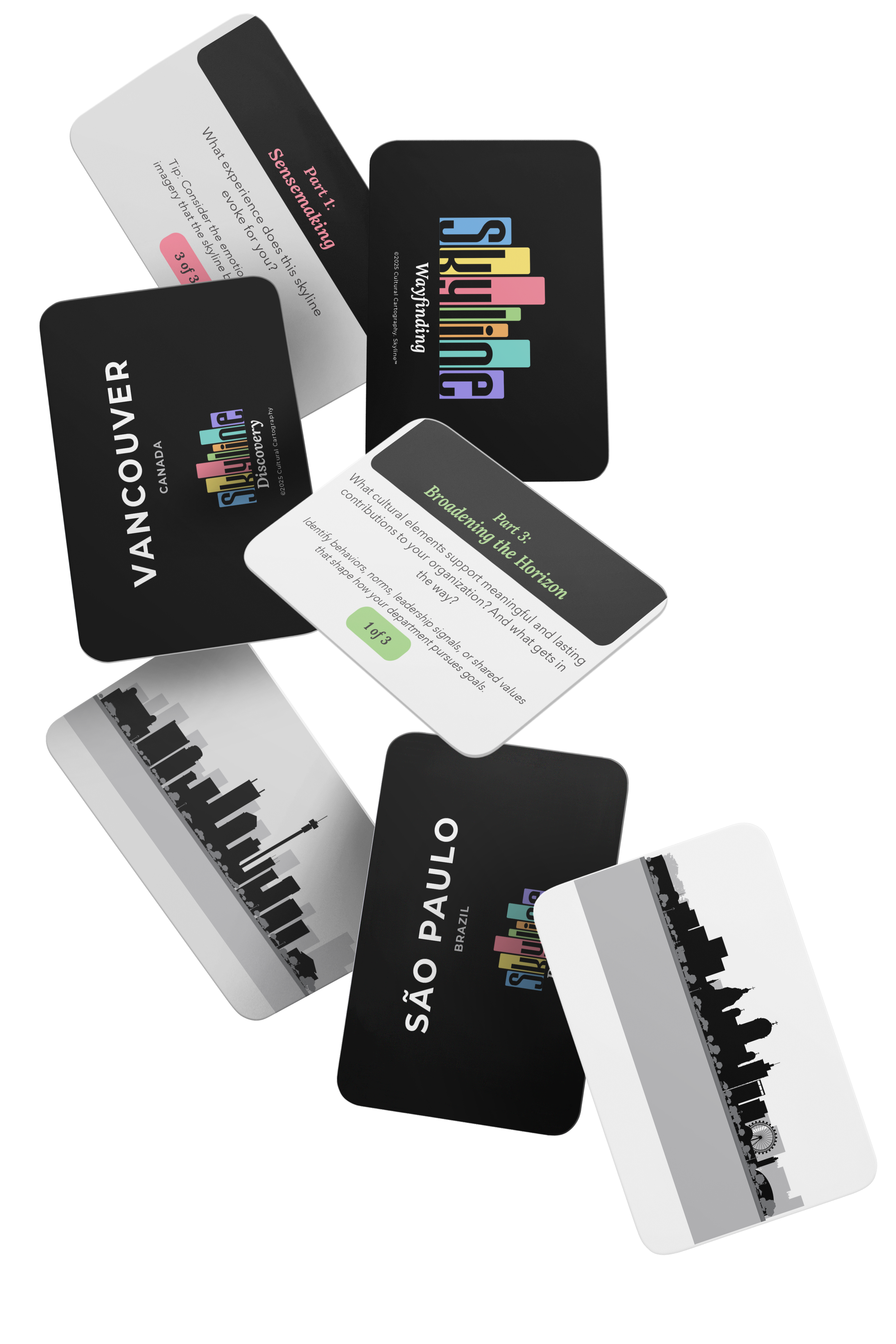
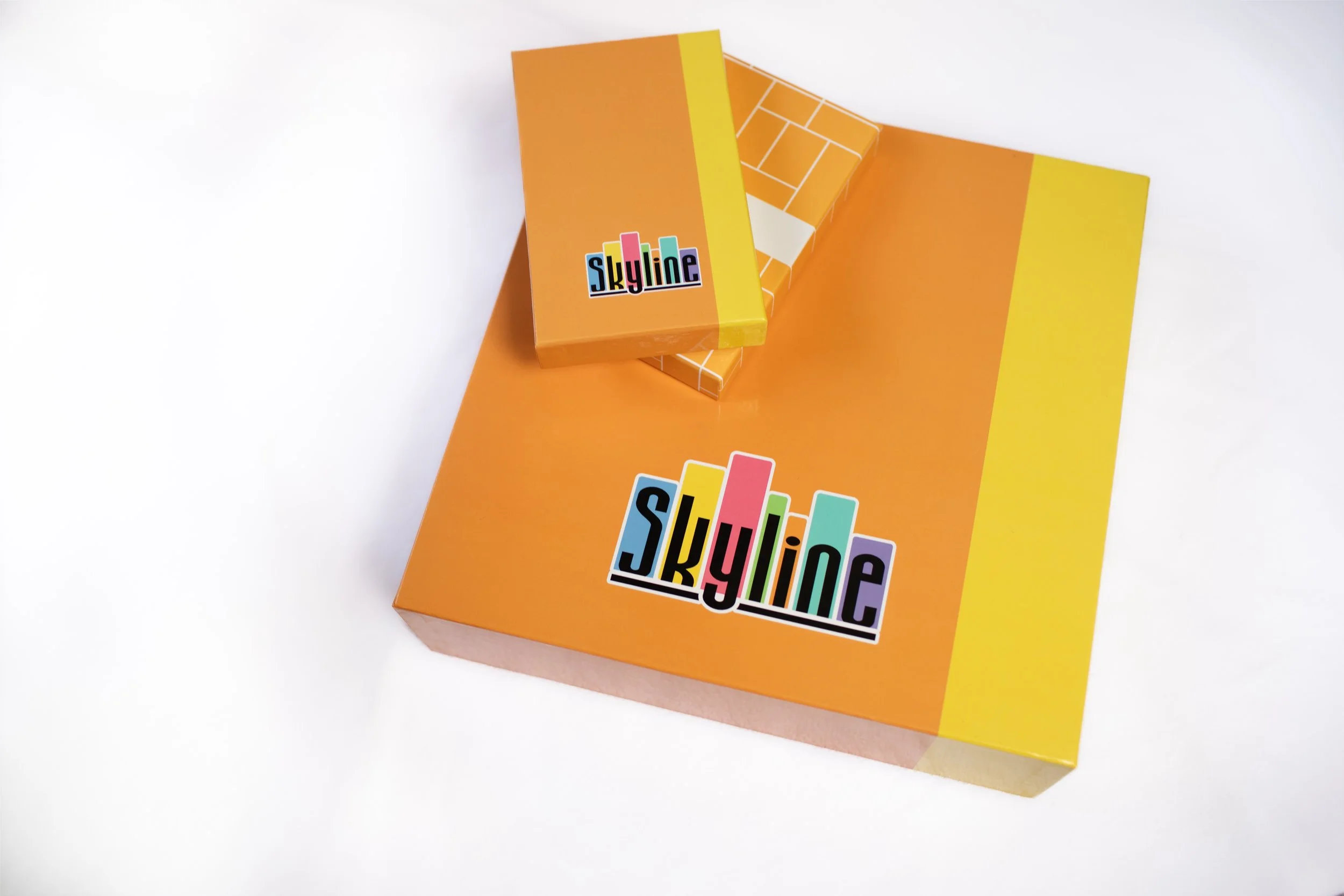
Skyline™ is a visual product that uses the universal language of city skylines to help organizations surface what's working, what's missing, and what needs to change before those gaps become expensive.
Skyline uses three core dynamics:
Recognition
➡️
Interpretation
➡️
Reconstruction
Together, they create a structured path from: "I've never thought about our culture this way"to "Now I can see it, and I know what to do from here."
Exactly what you get:
Everything you need to make culture visible, discussable, and actionable.
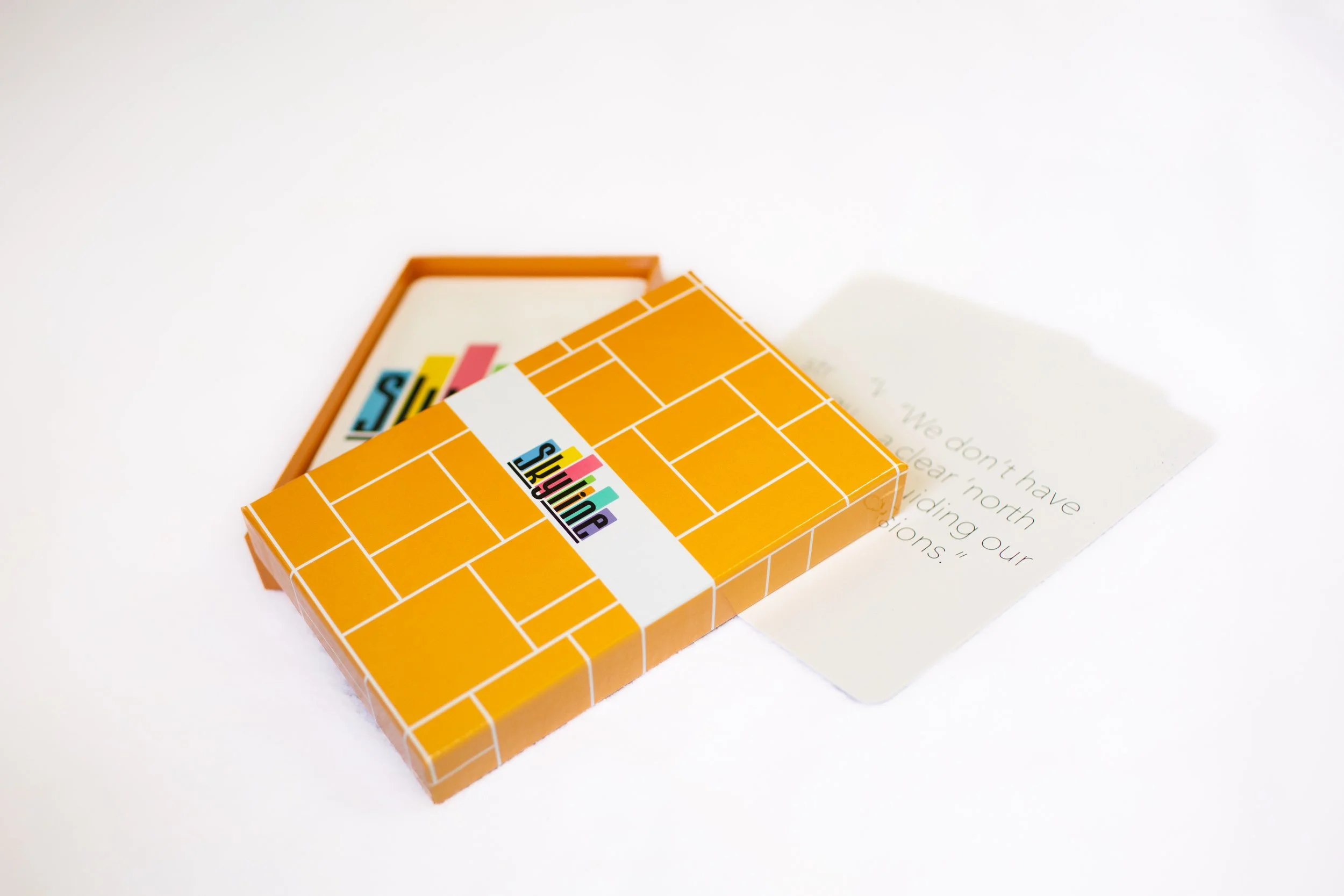
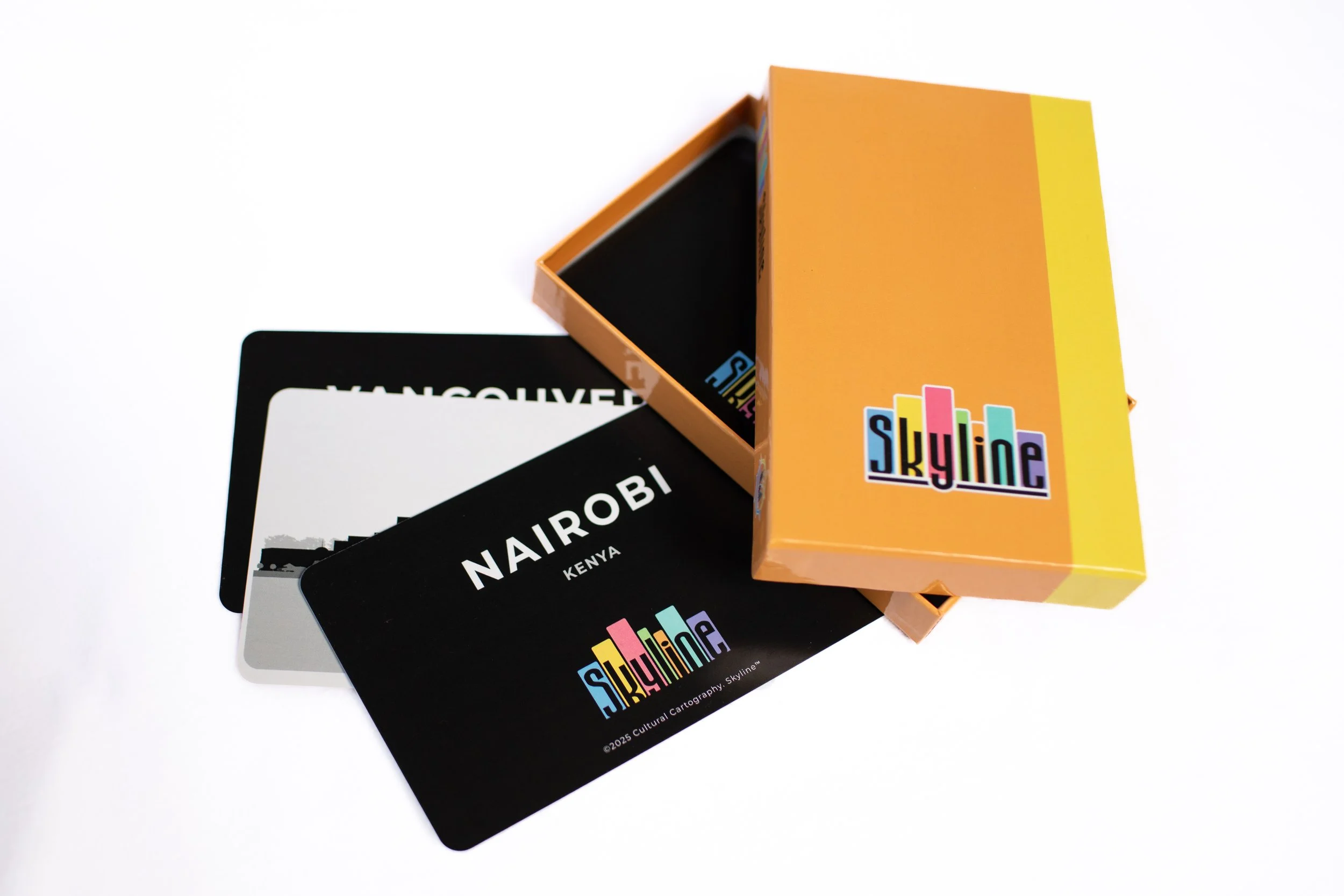
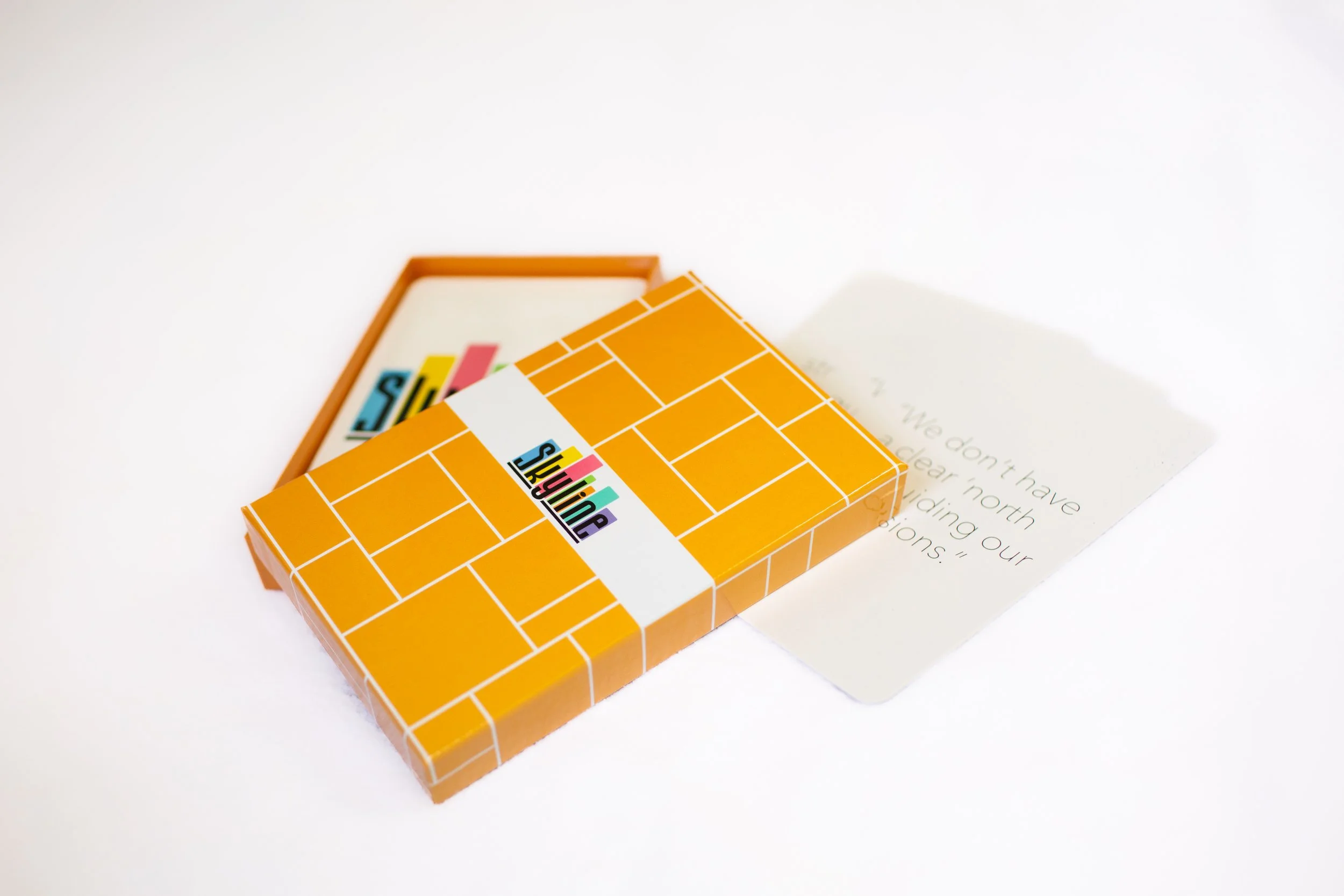
Discovery Deck
25 carefully selected city skyline cards that surface the dynamics shaping every meeting, decision, and hire in your organization, without putting anyone on the spot.
Great for: leadership offsites, team kickoffs, culture check-ins
Wayfinding Prompts
A five-part facilitation sequence that takes any room from "we kind of know something's off" to a shared picture of where the organization is and where it's headed.
Great for: facilitators of all experience levels, first-time Skyline sessions
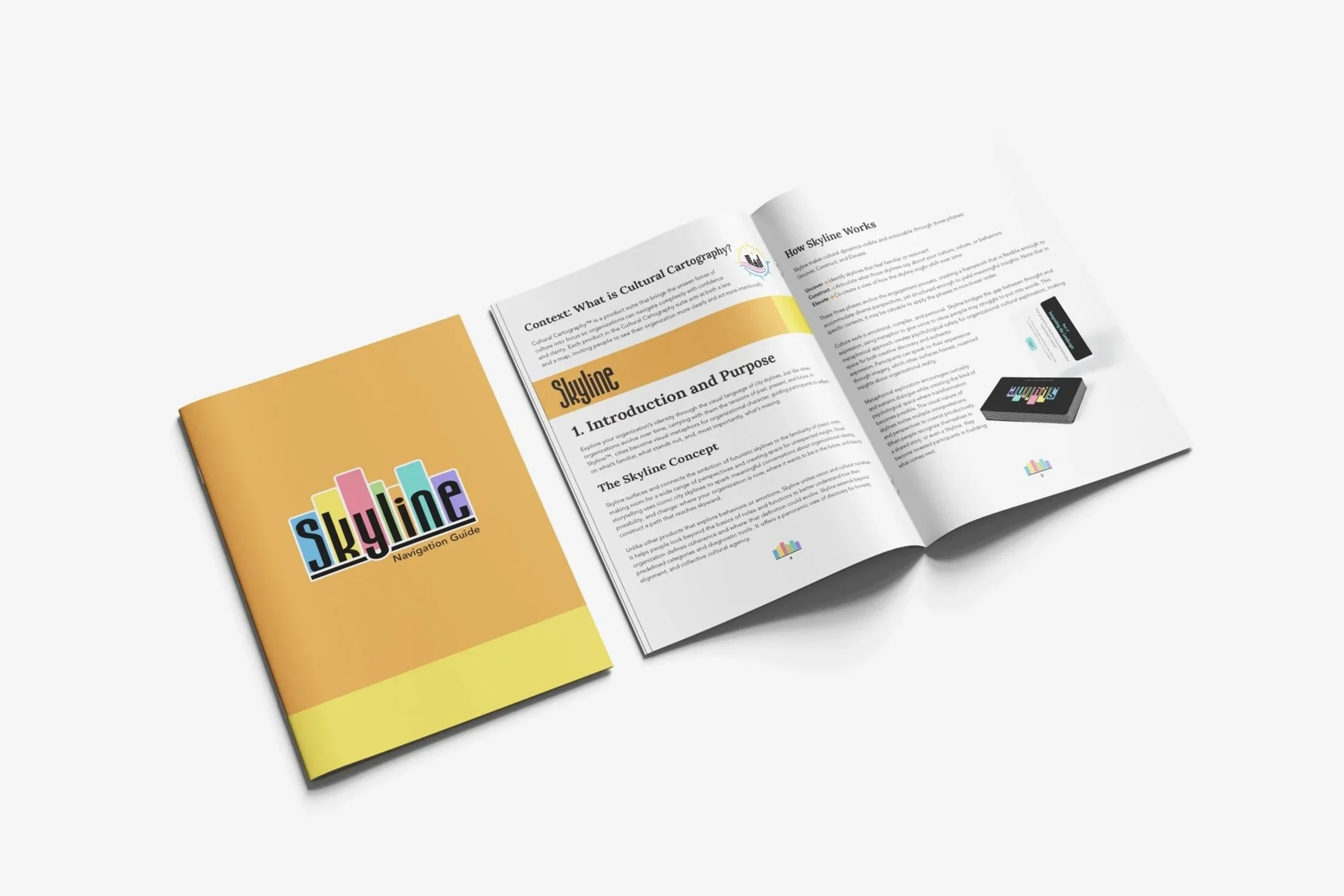
Navigation Guide
A facilitator’s companion designed to help you lead with confidence. It offers background context, practical guidance, and adaptable pathways so you can navigate sessions in a way that fits your team
Great for: keeping sessions focused, turning discussion into action
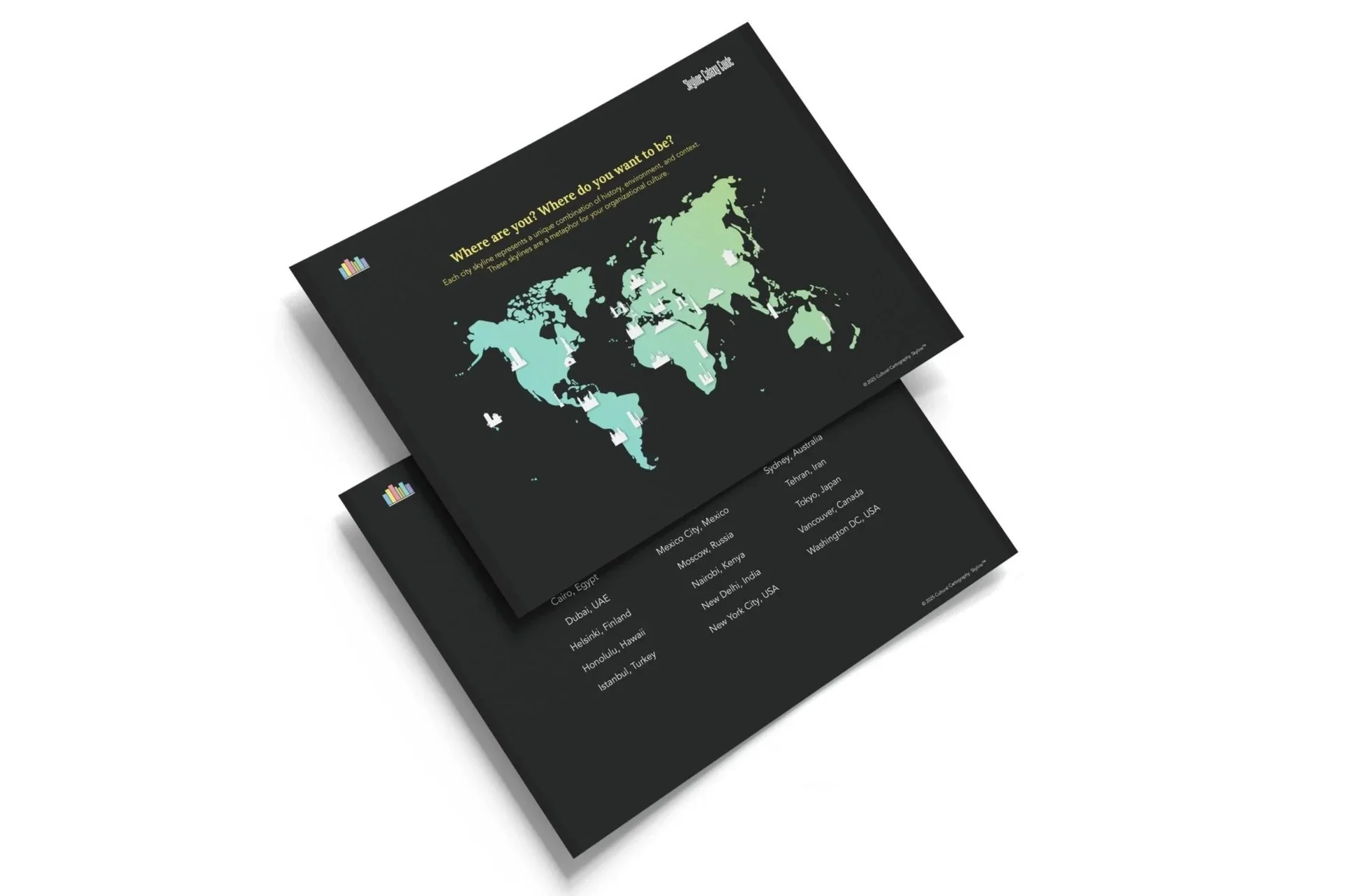
Galaxy Guide
A poster-format map of city skylines from around the world that gives your team a lasting visual shorthand for your culture, so those conversations don't have to start from zero every time.
Great for: anchoring ongoing culture language, visual display in shared spaces
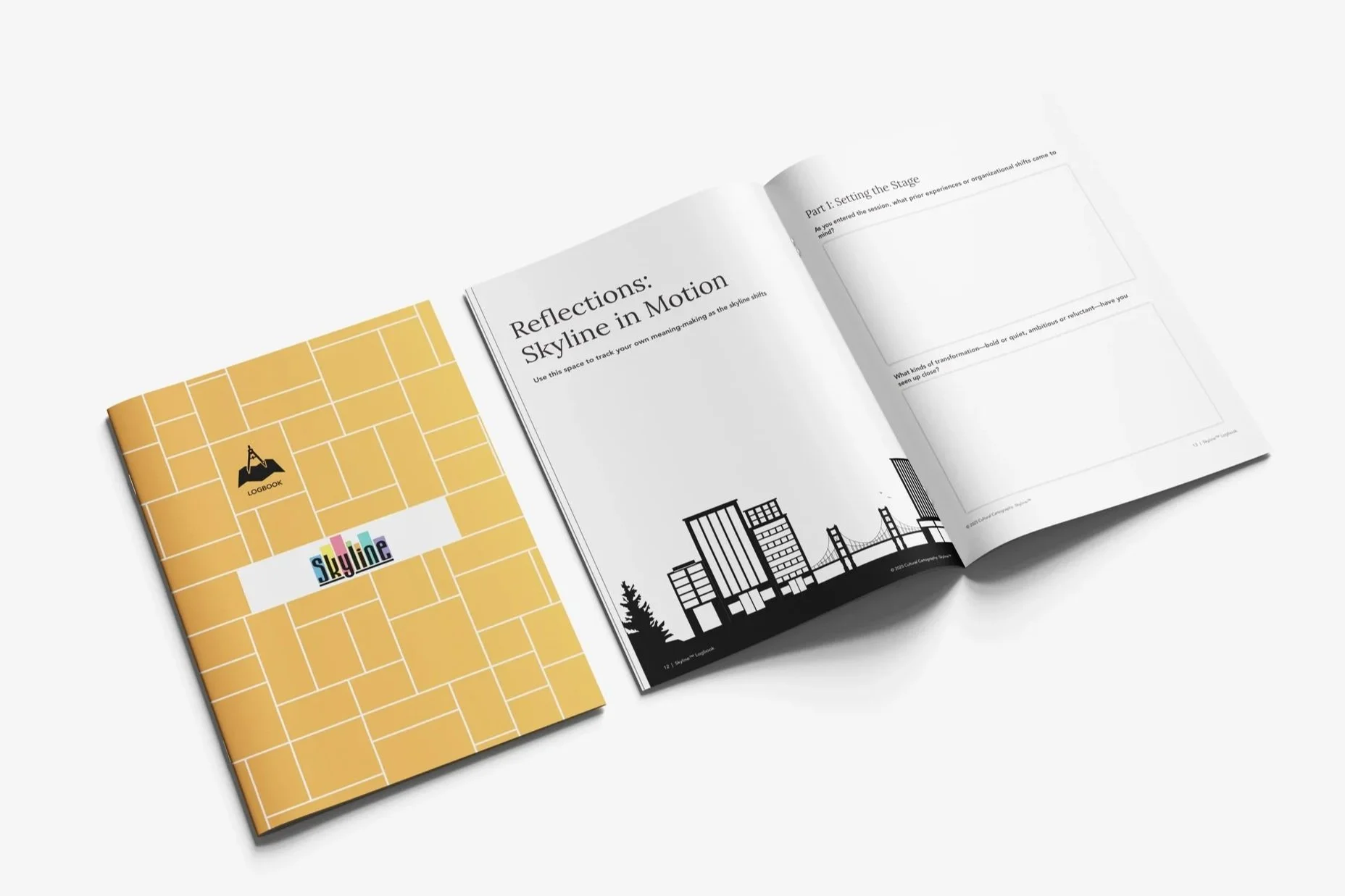
Logbook
A structured reflection log that turns what emerged in the session into something your team can actually build on before that session clarity fades.
Great for: between-session sensemaking, individual leadership reflection, culture transitions
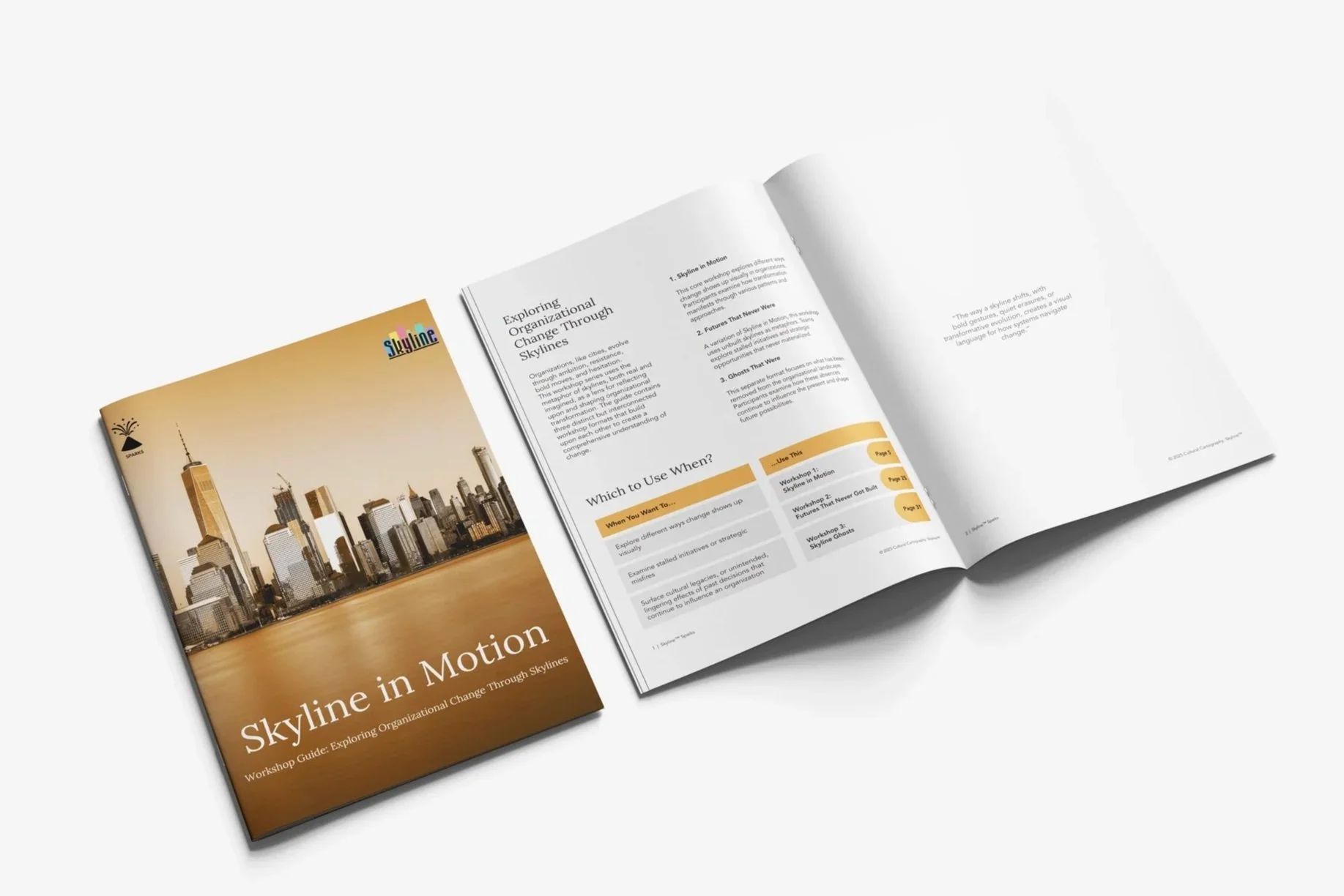
Sparks
A guide book that walks you through three ready-to-run workshops that go deeper on the specific dynamics holding your organization back: change resistance, stalled initiatives, and cultural legacies that nobody has named.
Great for: organizations already doing culture work who want to go deeper
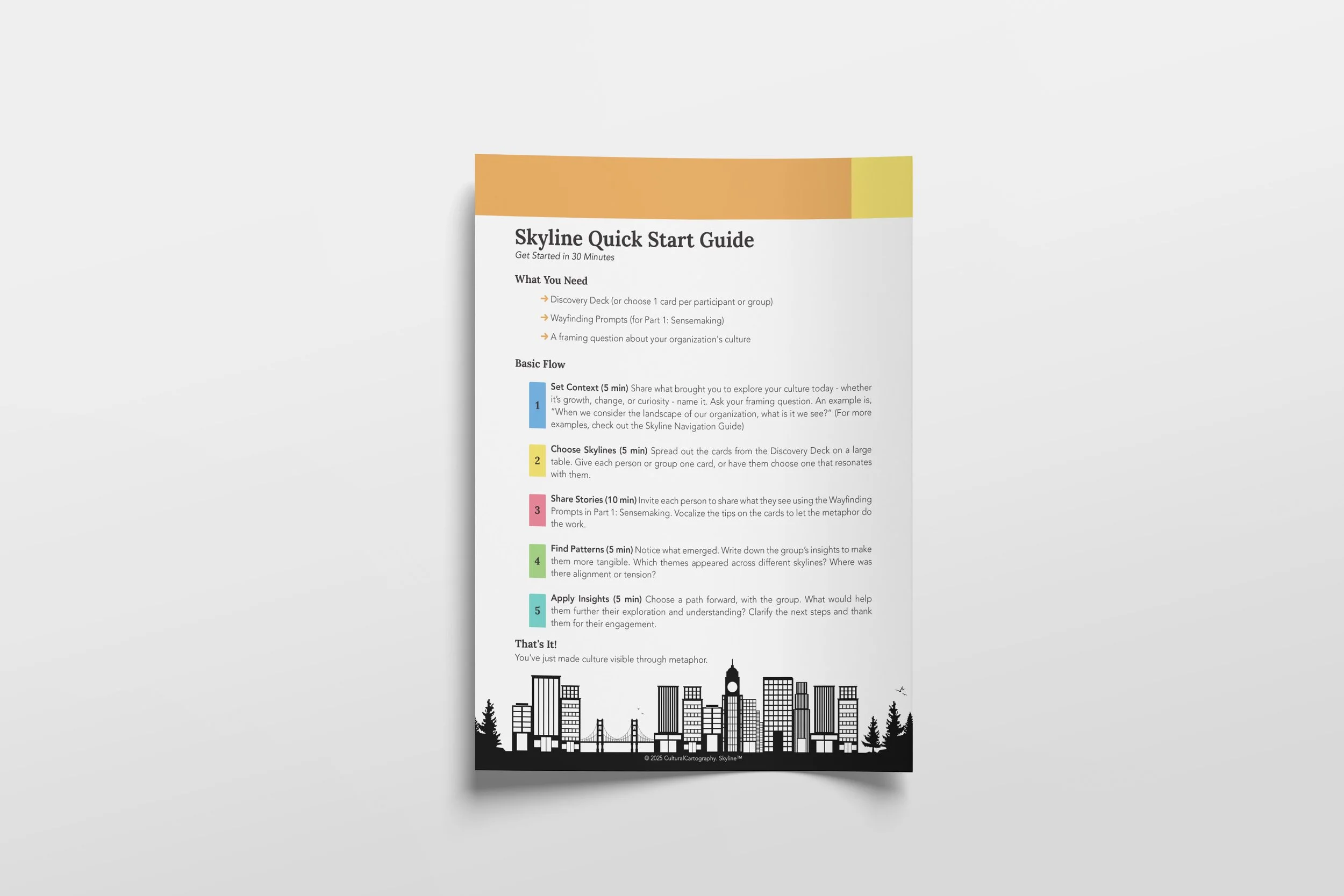
Quick Start Guide
Everything you need to run your first session within minutes. No training, consultant, or lengthy ramp-up required.
Most culture work gets scheduled for "when things settle down." But those moments rarely come.
Skyline is designed to be used:
🎯
Before strategic planning
When leadership needs decisions grounded in the culture that actually exists, not the one they're assuming.
👤
When onboarding new team members
So they understand the unwritten rules, values, and identity of the organization before the culture shapes them in ways nobody intended.
🔀
During a merger or reorg
When two or more organizational histories need to form one coherent narrative, without watching talent walk out the door.
📉
After a failed initiative
When the team needs to understand the cultural dynamics that got in the way, so that the next initiative can go better.
🌉
When teams are siloed
To make the disconnection visible and give people a shared language for it, because you can't bridge a gap nobody has named yet.
🔄
At moments of leadership transition
When an incoming leader needs to understand more than what's on the org chart. A 90-minute Skyline session surfaces more than months of one-on-ones.
Skyline scales from a 30-minute cultural check-in to a multi-session transformation arc, depending on what your organization needs right now.

Skyline started as a question:
What if every person in the room got to be part of the culture conversation; not just the executives?
As an answer, Leila built Skyline. It’s something a team of 100 could do together in an hour, without needing her there in the room. It draws on organizational psychology, agile principles, and the kind of facilitation instinct that only comes from having been in hundreds of rooms where change was supposed to happen and didn't.
Every element of Skyline intentionally designed to surface what's already true in your organization, make it visible, and give people a real hand in shaping what comes next.
For example…
Say a leadership team runs a 50-minute Skyline session before a strategy offsite.
By the end, they've identified three patterns they've never named out loud: a disconnect between how engineering and product define 'done,' a trust gap between two divisions that merged 18 months ago, and a habit of re-centralizing decisions every time pressure rises.
Now they know where to focus.
You might have some questions:
-
Most culture work tries to change behavior without first making culture visible. Skyline does the step before: it surfaces what's actually happening and gives people a shared language for it. That shared language is crucial in making sure the change sticks.
-
No. The Wayfinding Prompts and Quick Start Guide are designed for internal leaders and HR teams to run on their own. The metaphor does a lot of the heavy lifting.
That said, if you want to go deeper, or you're dealing with significant organizational tension, Leila and the team are available to facilitate. Just reach out.
-
Skyline has been designed to work across organizational types, including large, established organizations with strong personalities, competing priorities, and multiple layers. The skyline metaphor is universal. The insights it surfaces are specific to your people and your moment.
-
The ideal conditions for culture work will never arrive, and waiting is its own kind of risk. Skyline was designed specifically for organizations under pressure, because that's when visibility matters most. A 30-minute session during a transition can surface more than a full-day retreat once things calm down.
-
The Navigation Guide walks you through exactly that: how to harvest insights, share them with stakeholders, and determine which Cultural Cartography product makes sense next. You won't be left with a stack of sticky notes and no clear path forward.
Ready to build your culture on purpose?
One Skyline session can surface what months of meetings haven't: a shared language for your culture that leads to faster decisions, cleaner transitions, and a leadership team that's finally building toward the same thing.