
Every organization says people are its greatest asset.
So why does nobody talk about what those people are actually feeling?
For leaders and change agents who keep watching good initiatives die because the emotional resistance was bigger than the business case.
When the change makes sense, but your people don’t think so.
Most change work focuses on the plan. But plans don’t account for the fear that makes people hesitate, the frustration that turns into resistance, or the trust deficit that means your best communicators can’t get through. Those emotional dynamics are running underneath every initiative you launch. And until someone names them, they’ll keep winning.
🔍
🔍
🔍
🔍
A restructuring was clearly the right move, but six months later half the team still acts like it didn’t happen.
An initiative had full executive sponsorship and a solid rollout plan, but adoption stalled because nobody addressed the fact that people were scared about what it meant for their roles.
Leadership said all the “right things” about psychological safety, but the people three levels down still won’t say what they actually think in a meeting.
Your last engagement survey came back fine on paper, but you can feel the disconnect when you walk the halls. People are compliant, not committed.
Imagine what changes when your team can finally talk about what’s actually in the way.
FACET+S gives your organization a way to work with the emotional dynamics of change instead of pretending they’ll resolve on their own.
✔️
✔️
✔️
✔️
People tell you what they’re really worried about instead of performing buy-in they don’t feel.
Your change leads can read the emotional temperature of a room and adjust in real time, instead of pushing harder into a wall they can’t see.
Frustration stops festering and starts informing. When people are angry about something, that anger points directly at what needs fixing.
New initiatives land faster because people feel connected to the change instead of managed through it.
\ \ \ \ \ \ \ \ \ \ \ \
Introducing FACET+S™
A visual culture product that gives organizations a shared language for the emotional forces that accelerate or stall every change effort. FACET+S™ turns emotional undercurrents into actionable intelligence, so your team can move through resistance instead of around it.
FACET+S uses three core dynamics:
Uncover
➡️
Construct
➡️
Elevate
Together, they create a structured path from “we know something’s off but nobody will say it” to “now we can see it, name it, and work with it.”
Exactly what you get:
Everything you need to surface emotional dynamics, make them discussable, and channel them into forward motion.

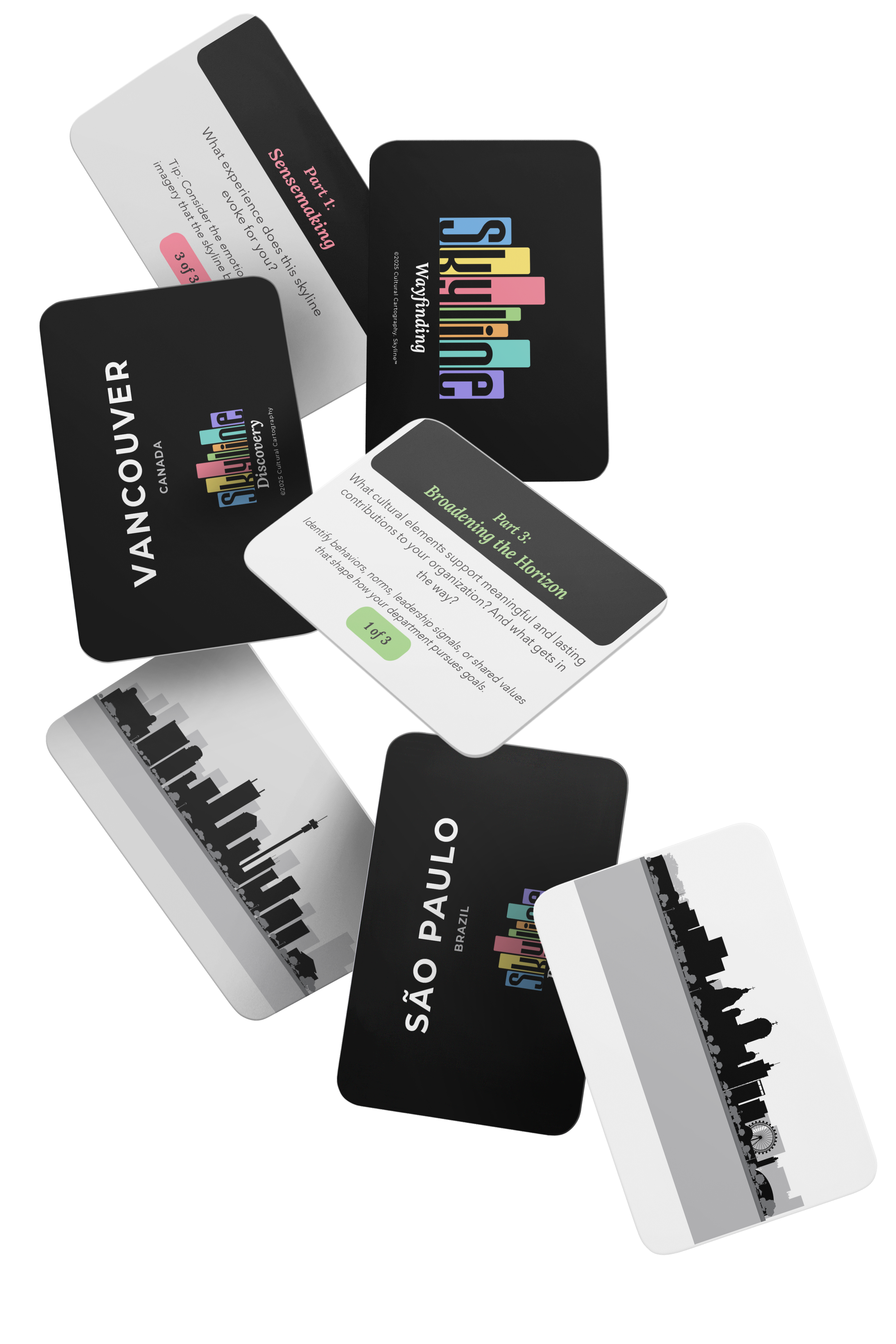
Discovery Deck
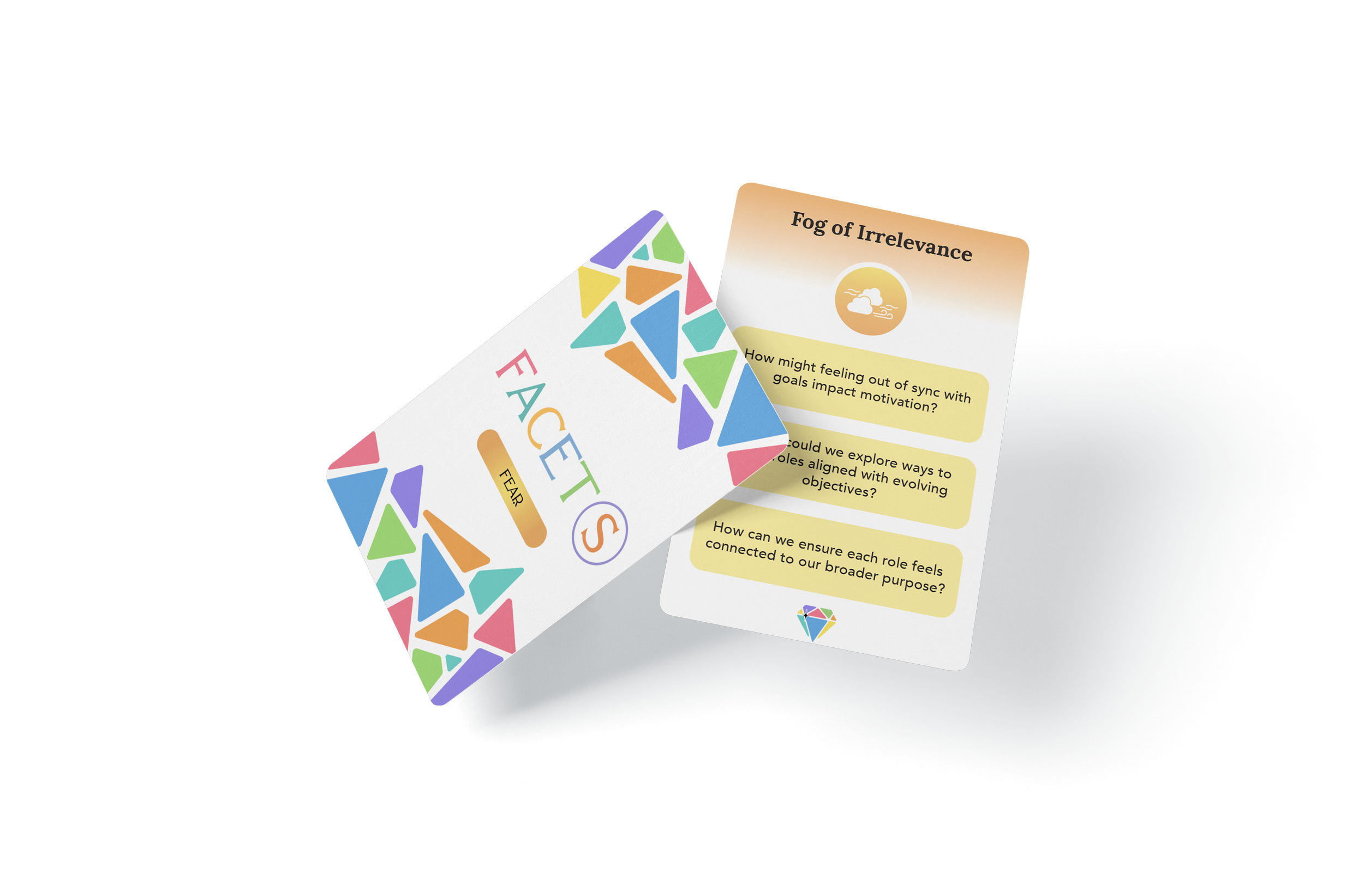
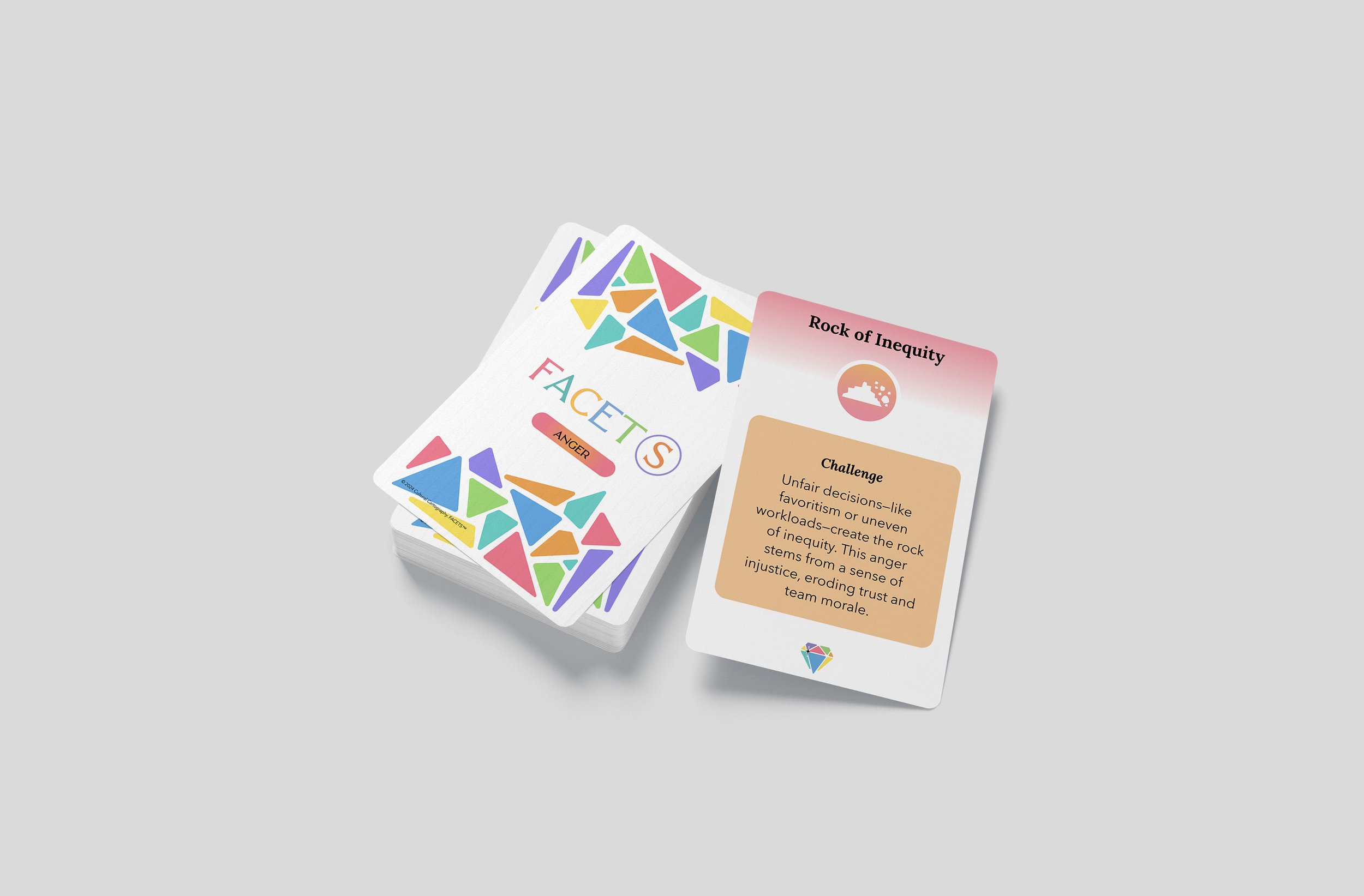
Cards built around the five FACET+S forces, each grounded in a navigational metaphor that gives your team a way to name what’s happening without putting anyone on the defensive.
Great for: change kickoffs, trust-building sessions, post-initiative retrospectives
Wayfinding Prompts
A facilitation sequence that takes any group from surface-level “everything’s fine” to an honest, specific picture of what’s actually driving resistance, hesitation, or disengagement.
Great for: facilitators at all experience levels, first-time FACET+S sessions, teams navigating tension
Galaxy Guide
A poster-format visual of the full FACET+S framework that gives your team a lasting reference point for emotional dynamics.
Great for: anchoring ongoing emotional language, visual display in shared spaces
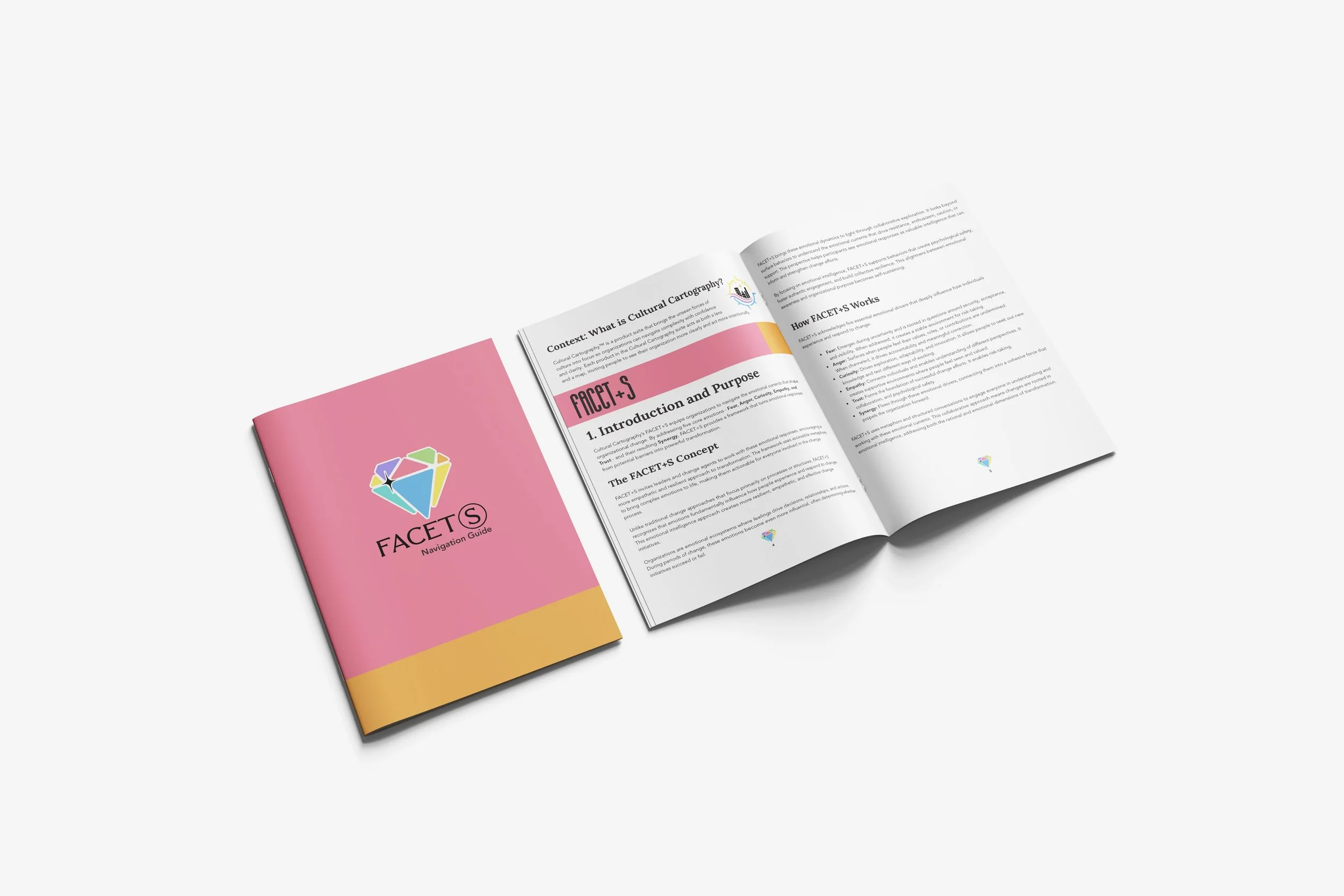
Navigation Guide
Background information, practical tips, and customization suggestions for tailoring FACET+S to your organization’s specific situation. Includes guidance on which emotional forces to prioritize based on what your team is experiencing.
Great for: facilitating a FACET+S session without an outside consultant.
Sparks
Creative challenges and activities designed for teams ready to go deeper on specific emotional forces.
Great for: teams already doing emotional awareness work and want to go deeper
Logbook
A structured reflection journal that captures what surfaced in the session and turns emotional insights into something your team can track and act on over time.
Great for: between-session sensemaking, tracking emotional shifts during transitions, individual leadership reflection
Quick Start Guide
Everything you need to run your first session within minutes. No training, consultant, or lengthy ramp-up required.
Leaders know when something emotional is blocking progress. They just rarely have a way to address it that doesn’t feel like therapy.
FACET+S is designed for the moments when the human side of change can’t wait:
🎯
When a change initiative is stalling
And the reasons aren’t showing up on any dashboard.
👤
When trust between leadership and staff has eroded
And town halls, memos, and one-on-ones aren’t rebuilding it.
🔀
After a leadership transition
When the new leader has the org chart figured out but can’t read the emotional landscape.
📉
During periods of sustained uncertainty
When layoffs, reorganizations, or market shifts have left people in a fog.
🌉
Before rolling out a major initiative
Running a FACET+S session before launch is cheaper than running a recovery plan after.
🔄
When engagement scores are fine but something feels off
Because the survey measures satisfaction, and satisfaction and emotional commitment are different things
FACET+S scales from a 5-minute emotional check-in to a full-day workshop, depending on what your organization needs right now.

FACET+S started as a question:
What if organizations had a structured way to work with fear, anger, curiosity, empathy, and trust instead of pretending those forces aren’t in the room?
Leila Rao and her team built FACET+S to draw on organizational psychology, agile principles, and the kind of emotional intelligence that only comes from having been in hundreds of rooms where the real conversation was happening underneath the official one. Every element is intentionally designed to make it safe for people to say what they’re actually thinking, without making anyone feel exposed.
You might have some questions:
-
FACET+S uses navigational metaphors (fog, rocks, anchors, bridges) precisely so people can talk about emotional dynamics without it feeling like a therapy session. The metaphors create enough distance to be honest and enough structure to be productive.
-
Engagement surveys measure satisfaction at a point in time. FACET+S surfaces the emotional forces that are driving behavior right now: the fear that’s making people hesitate, the frustration that’s turning into resistance, the trust gap that’s making your communications land flat. These forces shape engagement scores, but they don’t show up in them.
-
No. The Wayfinder Prompts and Quick Start Guide are designed for internal leaders, HR teams, and change agents to run on their own. The metaphors do most of the heavy lifting. That said, if you’re dealing with significant emotional tension or a trust breakdown, Leila and the team are available to facilitate.
-
FACET+S is designed to move from conversation to action. The Logbook captures specific insights and turns them into trackable commitments. The Sparks activities give teams targeted follow-up work on whatever emotional force emerged as the biggest barrier. And the Navigator’s Guide includes guidance on what to do next based on what surfaced, including which Cultural Cartography product makes sense as a follow-up.
-
It’s the best time. The emotional forces FACET+S addresses are loudest during change, and that’s exactly when they do the most damage if they go unaddressed. A 30-minute FACET+S check-in during a transition can surface what weeks of status meetings won’t touch.
Ready to work with what people are actually feeling?
One FACET+S session can surface what months of meetings haven’t: the fear, frustration, and trust gaps that are stalling your most important work. Name them, and you can finally move through them.