
Every organization has a plan. So why do so many transformations still struggle to deliver the results they promised?
For leaders and change agents who know that success depends on more than milestones, project plans, and good intentions.
You launched the initiative. You aligned stakeholders. You built the roadmap.
Then reality happened.
New information surfaced. Priorities shifted. Teams interpreted the work differently. The conditions that shaped the original plan changed before implementation was halfway complete.
Mirroring the struggle:
When your organization needs to adapt, but your systems are built for certainty.
Most organizations approach change as if success comes from creating a better plan.
But adaptive organizations succeed because they learn how to navigate uncertainty.
The challenge isn't a lack of strategy.
It's a lack of shared capability for sensing, learning, adapting, and moving forward together when the future refuses to cooperate with the plan.
🔍
The transformation plan looked great on paper, but nobody knew how to respond when conditions changed.
🔍
Teams are working hard, yet lessons learned in one area never seem to spread to another.
🔍
Leaders want agility, but existing processes make experimentation feel risky.
🔍
🔍
Every department experiences the same challenge differently, making alignment difficult.
Improvement efforts keep getting deprioritized because day-to-day work always takes precedence
The future they want
Compass for Agility helps organizations develop adaptive capability, turning uncertainty from a source of frustration into a source of learning.
✔️
✔️
Teams know how to learn from emerging information instead of waiting for perfect certainty.
Conversations focus on exploration and experimentation rather than defending existing assumptions.
✔️
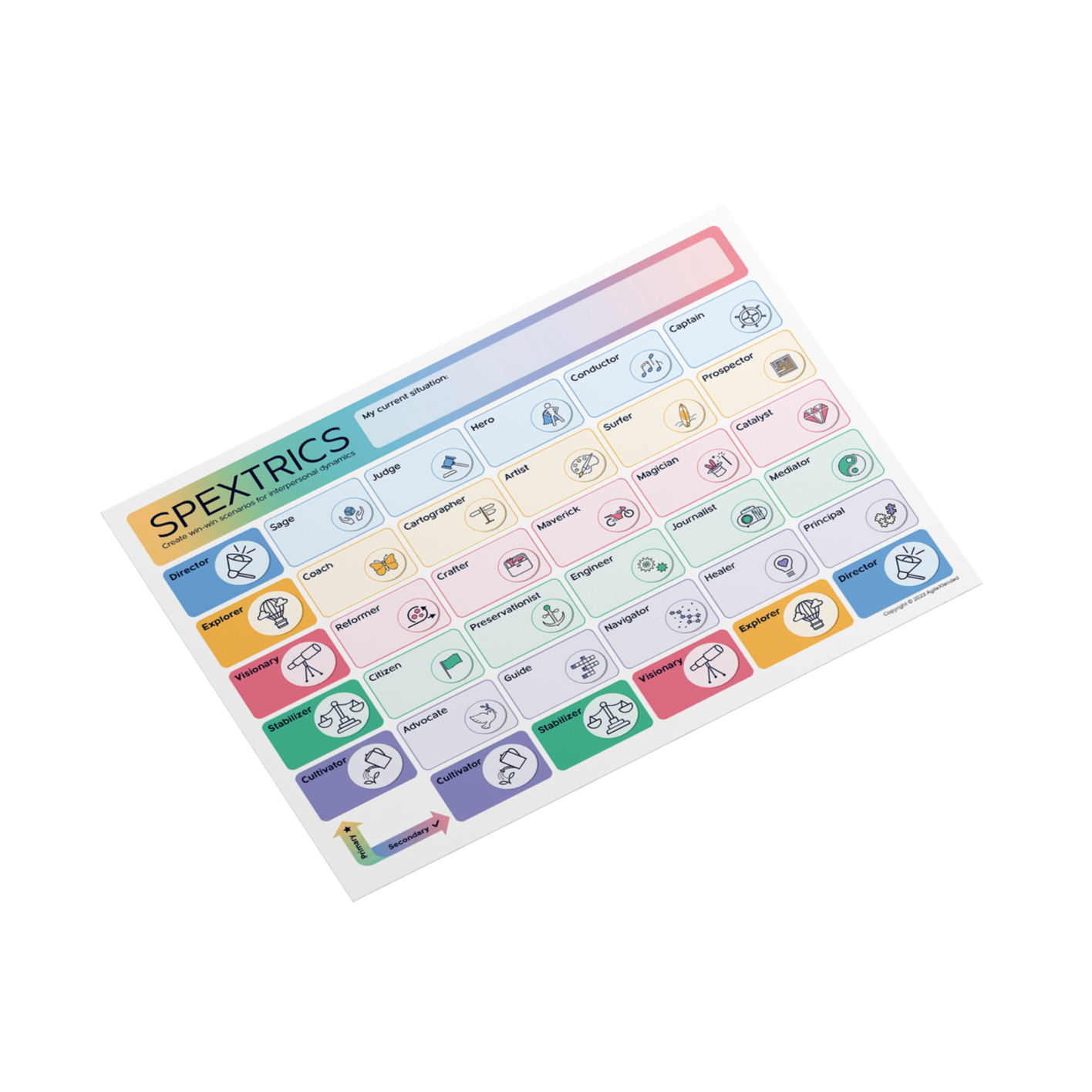
People share a common language for understanding challenges and opportunities.
✔️
Leaders can see where progress is happening and where further learning is needed.
✔️
Every initiative leaves the organization stronger, smarter, and better prepared for what comes next.
Introducing
Compass for Agility
\ \ \ \ \ \ \ \ \ \ \ \
A visual facilitation system that helps organizations navigate complexity, build adaptive capability, and create a shared language for change.
Inspired by how experienced sailors continually adjust course while keeping their destination in sight, Compass for Agility gives teams practical ways to explore uncertainty, learn from experience, and move forward with confidence.
Compass for Agility is built around five phases of adaptive navigation:
PLACES stands for:
Together, these phases help organizations:
Explore opportunities and desired outcomes
Understand current conditions
Prioritize meaningful experiments
Make progress visible
Learn from experience and strengthen future decisions
Ideation
➡️
➡️
Identification
In-Action
➡️
➡️
Intake
Introspection
Imagine an organization that becomes more capable every time it experiences change.
Exactly what you get:
Everything you need to guide organizational learning across a 90-day adaptive cycle.
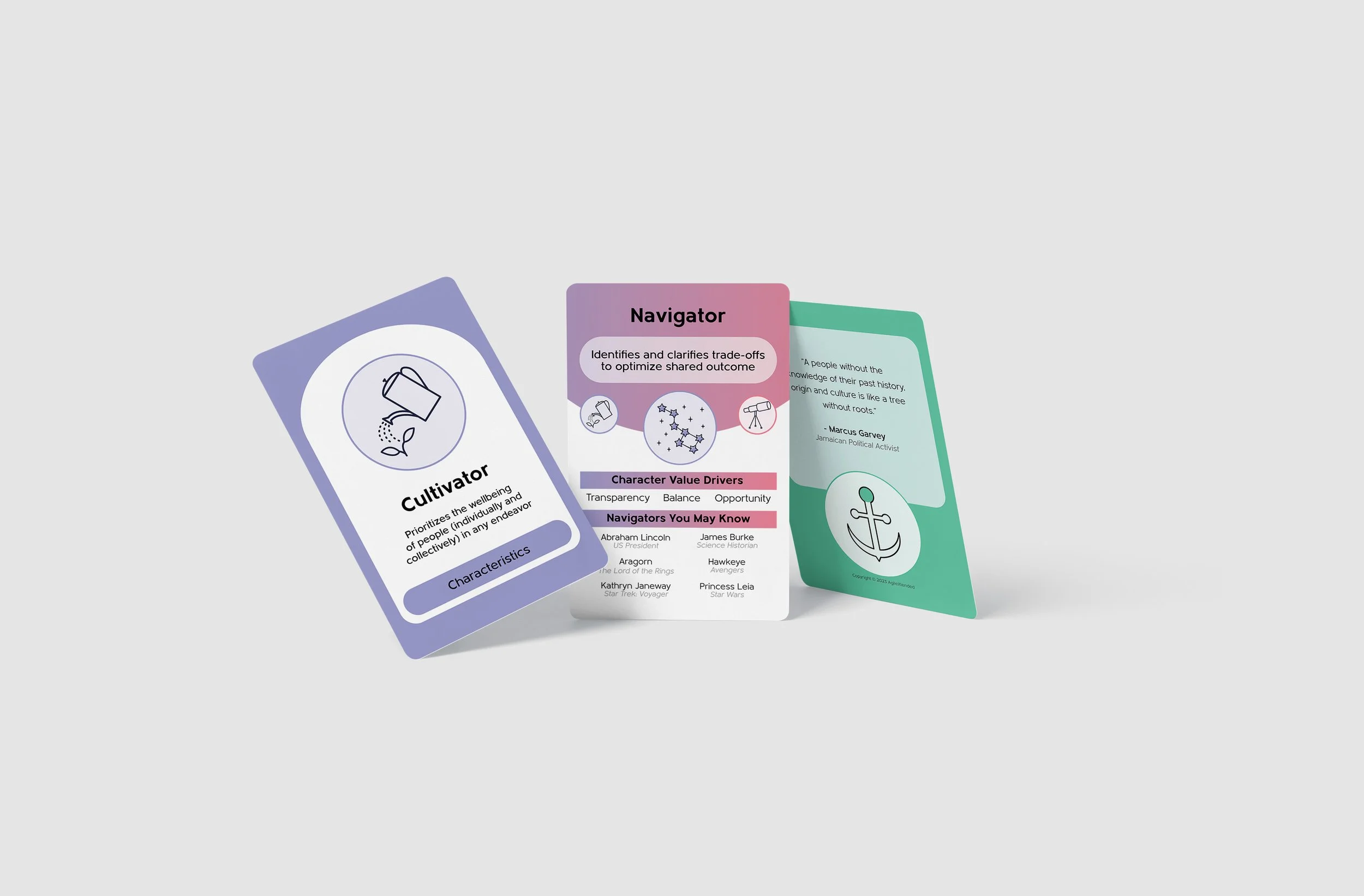
Discovery Deck
35 cards organized across the five Compass phases, featuring facilitation techniques, knowledge areas, and core competencies that help teams explore challenges and opportunities.
Great for: designing workshops, selecting techniques, adapting approaches to your organizational context.
Wayfinding Prompts
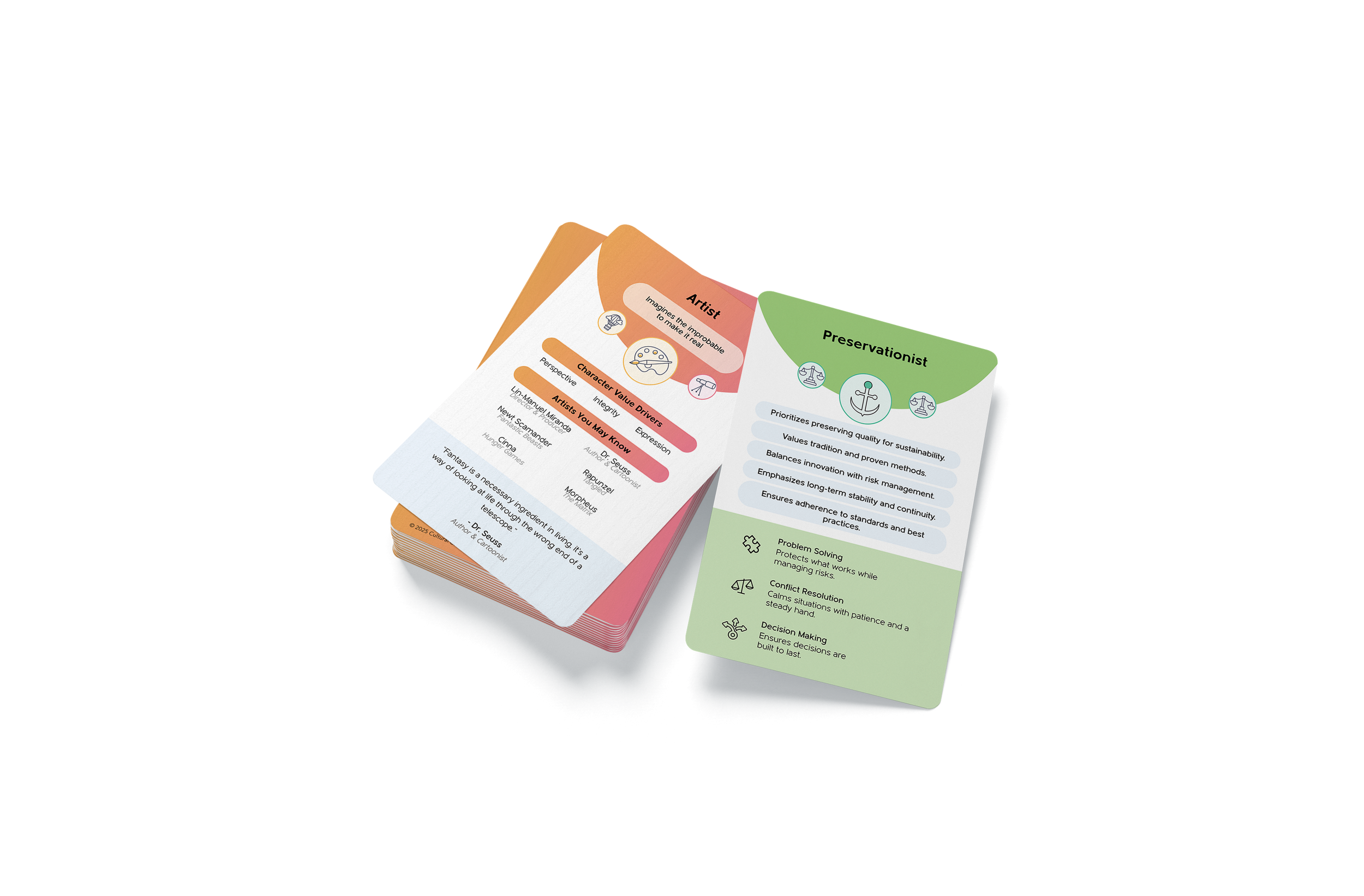
50 prompt cards that help facilitators ask better questions, reveal patterns, deepen reflection, and guide decisions throughout the journey.
Great for: coaching conversations, team workshops, reflection sessions, and decision-making discussions.
Quick Start Guide
An accessible introduction that helps facilitators connect their organizational knowledge with the Compass framework and begin facilitating immediately.
Navigation Guide
Comprehensive guidance on how Compass for Agility works, when to use it, and how to facilitate meaningful experiences across the organization.
Great for: leaders, internal facilitators, consultants, and change agents.

Galaxy Guide
A visual overview of the entire Compass framework, showing all five phases and associated facilitation techniques at a glance.
Great for: orientation, planning sessions, understanding how different techniques connect.
Logbook
A reflective journal designed to capture observations, experiments, insights, and learning across multiple Compass cycles.
Great for: organizational learning, facilitator reflection, capturing patterns over time.
Sparks
Provocations, facilitation activities, reflective exercises, and companion resources that help teams dive deeper into organizational learning and change.
Great for: overcoming obstacles, introducing fresh perspectives, and extending learning beyond the workshop.
Timing and Fit:
When the organization knows it needs to evolve, but isn't sure how to do it sustainably.
Compass for Agility is especially valuable when:
Agile transformations have stalled or failed to gain traction.
Teams are constrained by rigid systems and ways of working.
Leaders need measurable progress within the first 90 days.
Market conditions require faster adaptation.
Existing processes need to evolve without losing what already works.
Growth is creating new demands for coordination and responsiveness.
It Can be used to:
Turn ideas into action.
Adapt practices to fit organizational realities.
Build the capabilities needed to respond more effectively as conditions change
Compass for Agility scales from a focused team initiative to enterprise-wide transformation because the process remains the same: learn, adapt, and build on what emerges.

What if organizations treated adaptability as a capability they could intentionally develop?
Compass for Agility was created as part of the Cultural Cartography product suite, helping organizations make the invisible dynamics of change visible and actionable. Rather than prescribing a single methodology, the framework draws from systems thinking, organizational learning, experimentation, facilitation, and adaptive change practices to help people navigate complexity together.
You might have some questions:
-
No. Compass for Agility is not a prescriptive methodology. It provides a structure for learning, adapting, and making sense of change in real organizational contexts. Rather than telling teams exactly what to do, it helps them develop the capability to discover what works in their environment.
-
Not necessarily. Some organizations move through all five phases across a full 90-day cycle, while others focus on the phases most relevant to their current challenges and goals
-
The system is designed to support both experienced facilitators and leaders facilitating within their own organizations. The Navigation Guide, Discovery Deck, Wayfinding Deck, and Quick Start Guide provide practical support throughout the process.
-
Many organizations begin generating meaningful insights and identifying experiments within their first 30 days. Each 90-day cycle strengthens organizational understanding and adaptive capability, creating momentum that builds over time.
-
Yes. Compass for Agility scales from individual coaching conversations and team workshops to enterprise-wide transformation efforts because its focus is on learning, adaptation, and shared understanding rather than rigid implementation.
Ready to build an organization that learns as fast as change happens?
Every challenge, experiment, and conversation contains information your organization can use to become more adaptable.
Compass for Agility helps you capture that learning, share it across teams, and turn uncertainty into forward momentum.
Because the organizations that thrive aren't the ones with the best plans.
They're the ones that learn how to navigate whatever comes next